
Perceptions are just as important to the uptake of robots as technology—evident in how widely perceptions differ by country and region. To measure just how different perceptions are, we surveyed people in four countries, comparing results from North America, Europe, and Asia. We found that robots are perceived more favorably in Japan and China than in the US and the UK. We also found differences between these two Asian countries in how robots trouble them: China is concerned with safety and security; Japan, with how to balance costs and safety. Differences in industry and culture inform local views, indicating that strategies need to be tailored to each country if robots are to see greater use.
How Different Countries Perceive Robots: An original survey
Surveying perceptions
The spread of AI robotics depends on both technological developments and peoples’ perceptions. In August–September 2024, we surveyed people in the US, the UK, China, and Japan on their perceptions regarding the use of AI robotics in five fields. Results from the 4,162 respondents offered insight into how perceptions change by country and the challenges to improving them in each.
Japan and China perceive robots favorably
Results by country
People in Asia—in this case Japan and China—are more open to having entire services performed by robots than those in the US and the UK (Figure 1).
Chinese were particularly receptive, with nearly 60% responding favorably. Robots are widespread in China, with over six million service robots produced in 2022.1 The comfort with robots could be attributed to their prevalence in daily life, from serving food to cleaning at close quarters.*
Figure 1: Desired degree of robot involvement in consumer services by country
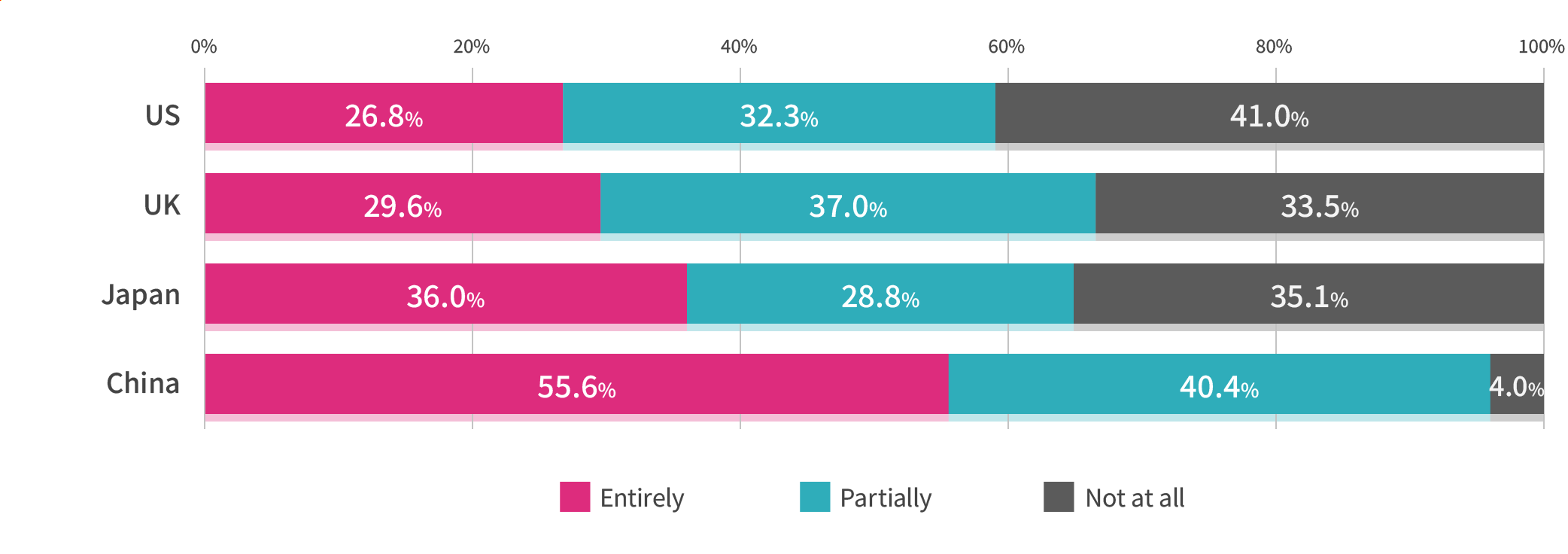
Note: Survey asked 4,162 people aged 20 to 69 in four countries (US, 1,039; UK, 1,033; China, 1,038; Japan, 1,052). Respondents were asked, “If you or a family member were to receive a service, what kind of service would you like to receive from a robot?” in five categories: cooking, caregiving for the elderly, medical care, education, and work. The figures represent averages across all five categories
Source: Mitsubishi Research Institute, Inc. survey carried out August–September 2024
In Japan, robots have long featured as human companions and allies in manga and anime. Various factors unique to the country may affect the draw of robots from a consumer perspective. For example, Japanese have long-standing familiarity with Sony’s semiautonomous pet robot, AIBO/aibo†, which launched in 1999 and has played a part in the lives of many.
A larger proportion of people in the US and UK prefers to have robots provide partial support rather than perform entire tasks. Naturally, having robots do everything has a greater impact than partial support; but in Western countries, robots may be seen as potential enemies, as they are often portrayed in science fiction. ठThis cultural background may make them resistant to the idea of entrusting everything to robots. A number of factors could be at play, ranging from the historical Luddite movement, where workers felt they had a right to not lose their jobs to machines, to religious beliefs about robots.
*Possible impact of Chinese survey respondents being mostly from major cities
†Sony Corporation, aibo
https://aibo.sony.jp/ (accessed 20 January 2025)
‡Concept termed the “Frankenstein Complex” by science fiction author Isaac Asimov has long been and still is a common trope in many well-known Western works. For details, see L. McCauley and D. Hall, The Frankenstein Complex and Asimov's Three Laws, pp. 9–14, 2007
§Proportion feeling that the spread of robots is “somewhat scary” is higher in Europe and the US than Japan and China2
Cooking assistant robot: conceptual image

Results by category
We looked at how interest in robot involvement differs across five categories: cooking, caregiving for the elderly, medical care, education, and work (Figure 2). More than any other category, respondents wanted their cooking to be entirely handled by robots. Caregiving for the elderly, medical care, education, and work followed, in that order.
A low desire for robots to handle the entirety of education and work strongly reflects how these fields inherently require a subjective approach in determining the best way forward for each individual. And those who desire partial involvement from robots clearly outnumber those who are happy to entrust everything to them.
Figure 2: Desired involvement of robots in consumer services by category
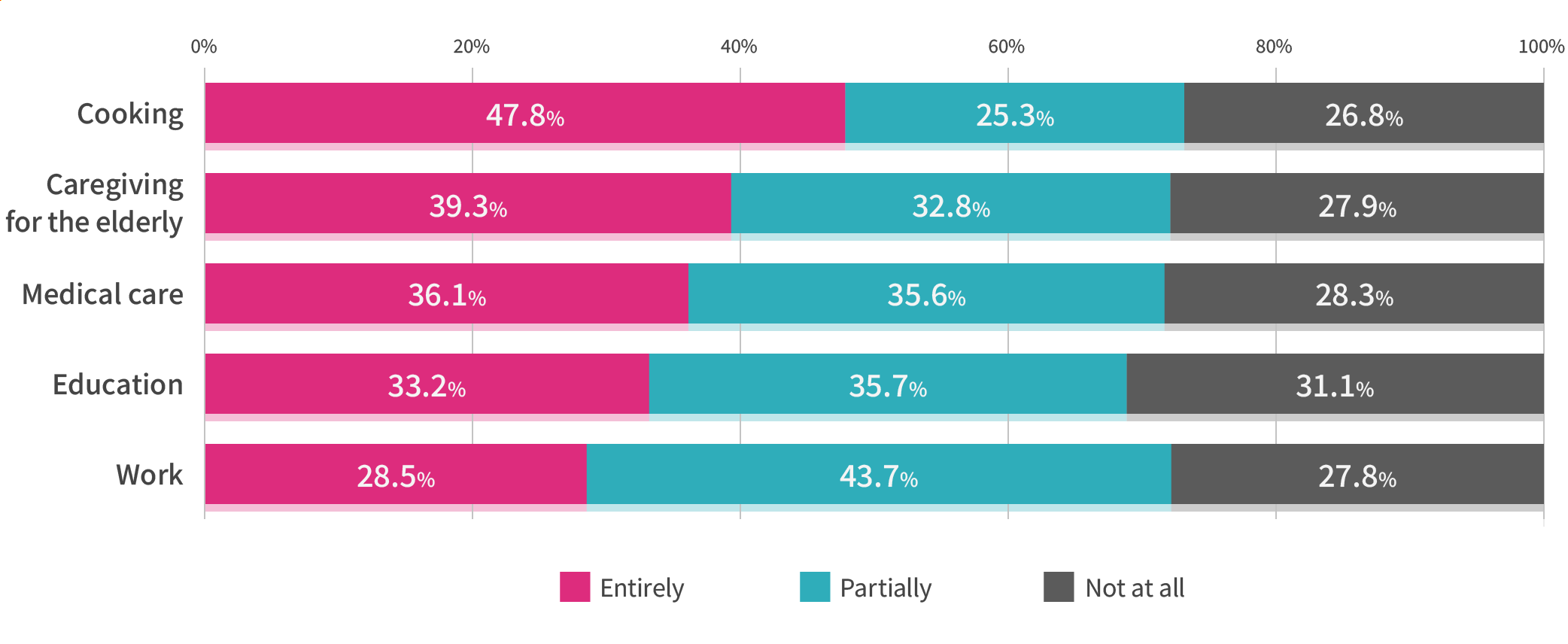
Note: Survey asked 4,162 people aged 20 to 69 in four countries (US, 1,039; UK, 1,033; China, 1,038; Japan, 1,052). Respondents were asked, “If you or a family member were to receive a service, what kind of service would you like to receive from a robot?” in five categories: cooking, caregiving for the elderly, medical care, education, and work. The figures represent averages across all four countries
Source: Mitsubishi Research Institute, Inc. survey carried out August–September 2024
Barriers to boosting uptake
Results by country
We examined what might be holding peoples’ perceptions back when it comes to robots (Figure 3).
Over half of Chinese respondents cited concerns about “safety and security” (shown in red). The same item worried only a third of respondents in the other three countries. Concerns about “cost” (yellow) were lowest in China and highest in Japan. High prices in Japan, driven by the insistence on high quality, may be a source of the concern. In Japan, “cost” and “safety and security” rank about equal, suggesting that proponents of robots must effectively maintain safety while curtailing costs. The demand for convenience is strong in China, with “usability” (green) about double that in the other countries.
For all four countries, psychological “unpleasantness and discomfort” (blue) was not very important. A high proportion of respondents answering “no assistance needed” in Figure 1 cited “nothing in particular” for concerns because they never intended to use robots in the first place. Excluding them, the proportion answering “nothing in particular” in the US and UK falls to about 10%.
Figure 3: Top concern toward robot involvement in consumer services by country
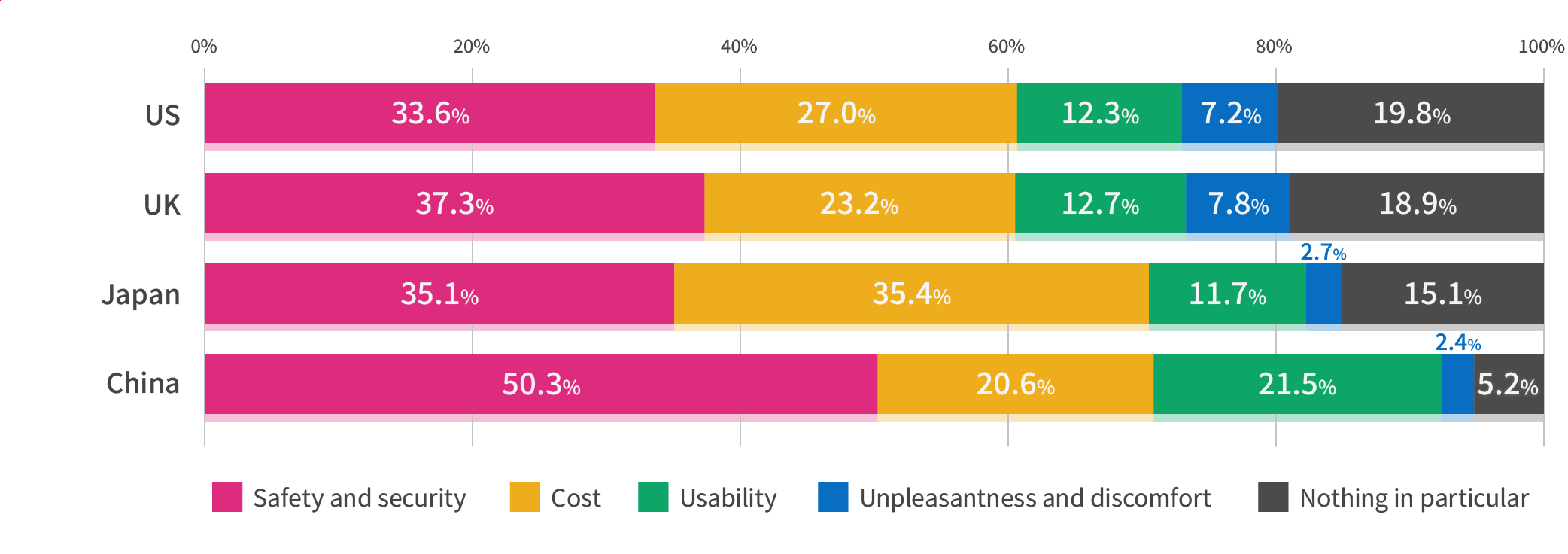
Note: Survey asked 4,162 people aged 20 to 69 in four countries (US, 1,039; UK, 1,033; China, 1,038; Japan, 1,052). Respondents were asked, “What are you concerned about when using the following services? Select one answer that most addresses your concern,” in five categories: cooking, caregiving for the elderly, medical care, education, and work. The figures represent averages across all five categories
Source: Mitsubishi Research Institute, Inc. survey carried out August–September 2024
Results by category
We also examined what worries people when it comes to using robots in their activities (Figure 4). There is a large discrepancy when broadly broken down into “cooking, caregiving for the elderly, and medical care” and “education and work.” Services using robots in the former group have a direct impact on people’s health. The bigger the impact, the higher the proportion of respondents citing “safety and security,” as a concern. Medical care topped the list, followed by caregiving for the elderly then cooking. For the latter group, the proportion responding “safety and security” is lower, and “usability” higher. The risk of accidents remains, but there is greater demand for convenience than in the former group, where the service itself always impacts the user’s body.
Figure 4: Top concern toward robot involvement in consumer services by category
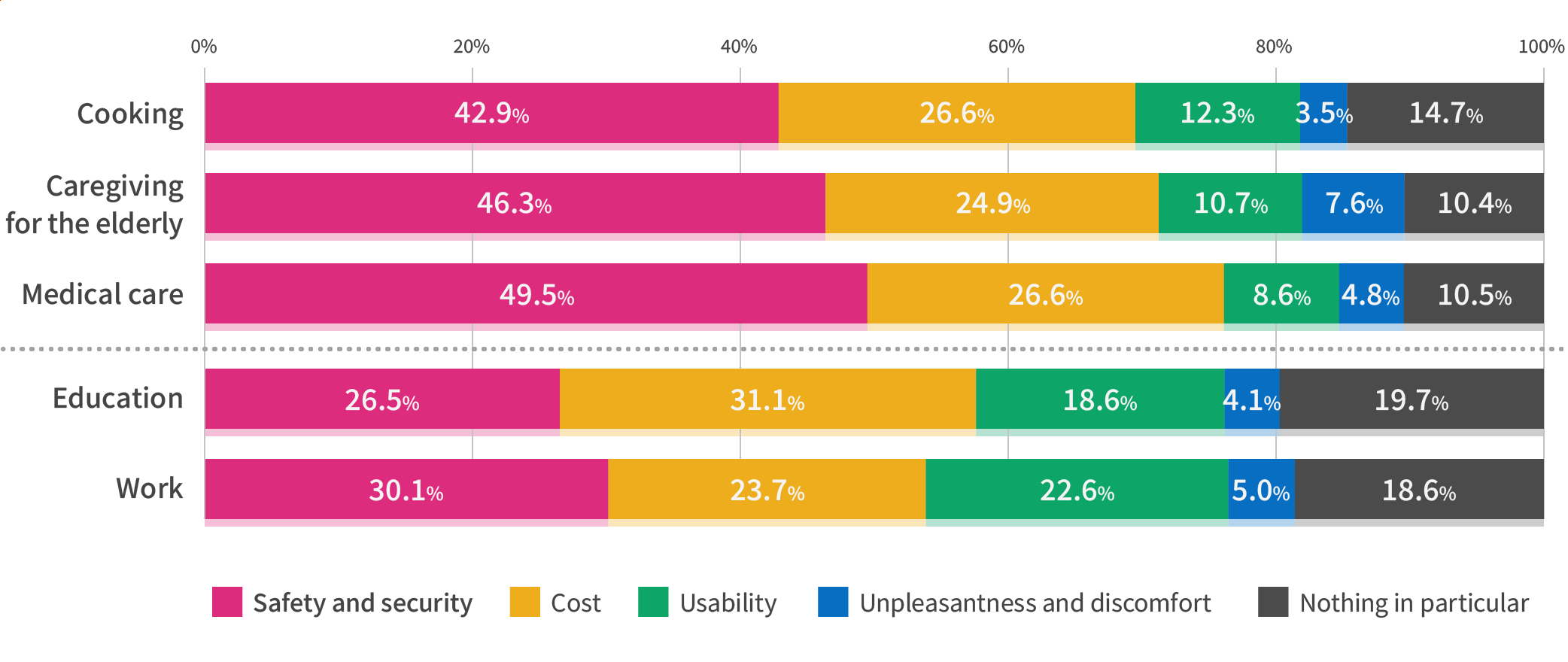
Note: Survey asked 4,162 people aged 20 to 69 in four countries (US, 1,039; UK, 1,033; China, 1,038; Japan, 1,052). Respondents were asked: “What are you concerned about when using the following services? Select one answer that most addresses your concern” in five categories: cooking, caregiving for the elderly, medical care, education, and work. The figures represent averages across all four countries
Source: Mitsubishi Research Institute, Inc. survey carried out August–September 2024
Strategies moving forward
The robot-friendly sentiment in Japan and China is an opportunity for developers. Here, they can launch robotics services ahead of other countries, accumulate real-world data and knowhow, expedite their R&D, and ultimately gain an edge in the global market.
In particular, Japan is the first to face—and tackle—numerous societal issues, making it the ideal market to start testing out services. For example, in nursing, robots are expected to play an important role in reducing caregiver workload while ensuring the quality of care in Japan. The knowledge gained here could then be applied in China, especially as the country comes to face issues already at hand in Japan. Indeed, China is already on track to see a steep rise in its elderly population, which would give rise to a massive market for elderly-care services3, 4 Thus developers have much to gain from turning their attention towards Asia.
Robots that support elderly lifestyles: conceptual image
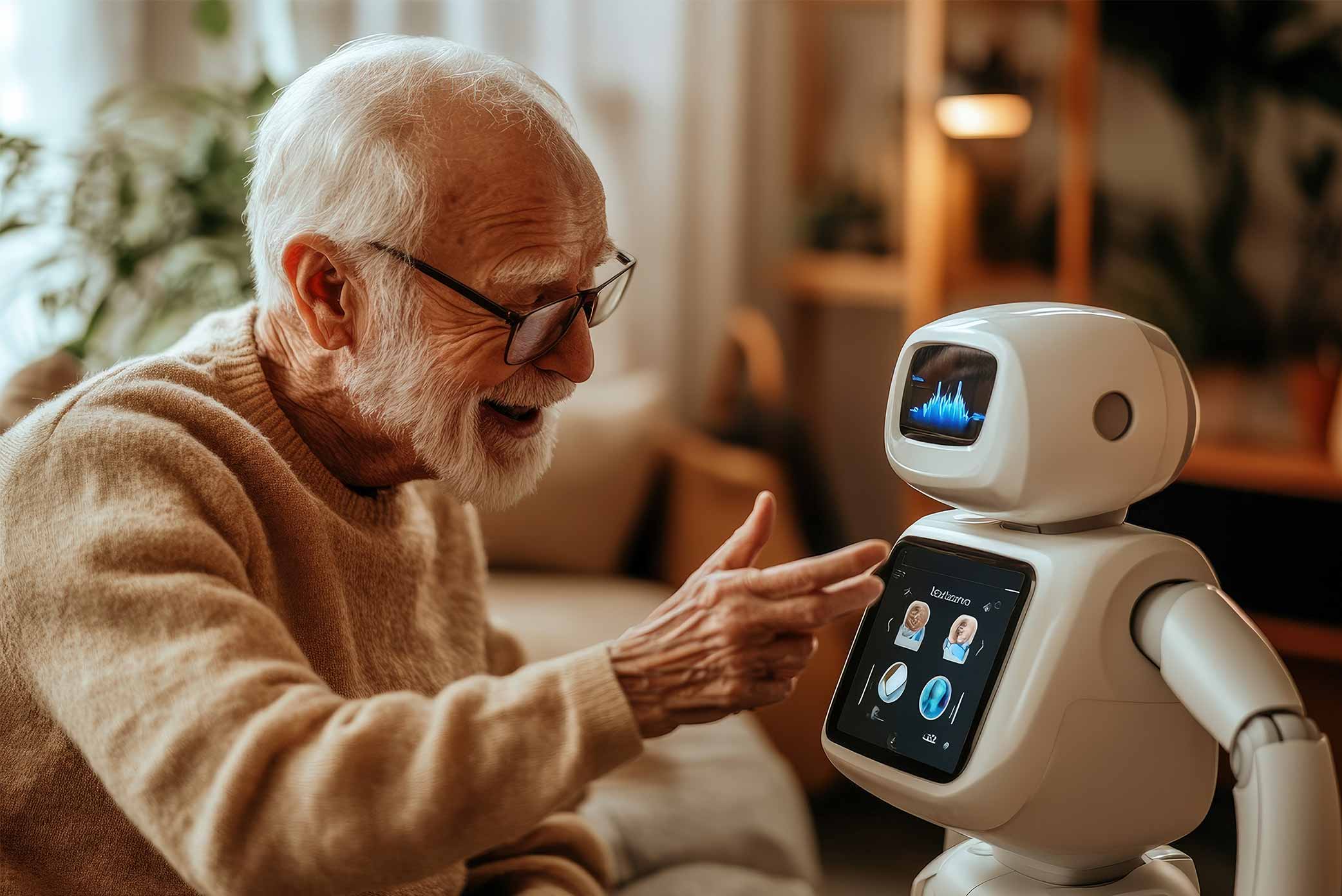
There are a few things that can be done to boost the acceptability of robots in general.
First, proponents must assuage the concerns that hinder their uptake. Our research shows that differing approaches will be needed; approaches suited to the countries where they will be adopted. Key for Japan is striking a balance between cost and safety and security, while in China resolving concerns about safety and security is crucial.
Second, developers need to make robotics services that people can empathize with. Users must be involved in development. Their thoughts will provide direction for designing services that anyone can readily use.* This will make services accessible and curtail learning costs. Ethical considerations such as protecting users’ privacy and right to self-determination are vital.
Third, we must prepare for a range of new issues that could arise as AI robots with advanced intelligence become more deeply embedded in our daily lives. For example, if service robots are introduced to private living spaces in the home, close long-term relationships between humans and robots could develop, especially in care settings. Negative visceral and emotional reactions to how robots appear, behave, or sound could become a bigger issue. Deep understanding of the social and ethical aspects of evolving AI robotics technology, dealing with emerging issues, and deploying these where robots are used are essential in building acceptability.
*For example, in care services the Ministry of Economy, Trade and Industry has participatory development initiatives for people with dementia
Works Cited
1Japan Science and Technology Agency, Science Portal China “中国のロボット産業、上半期は安定成長を維持” (China’s robot industry maintains steady growth in first half)
https://spc.jst.go.jp/
2Ministry of Internal Affairs and Communications “デジタルテクノロジーの高度化とその活用に関する調査研究の請負成果報告書” (Report on results of contracted research study into advance and use of digital technologies)
https://www.soumu.go.jp/
3MUFG Bank Ltd, Economic Monthly [China]
https://www.bk.mufg.jp/
4Japan External Trade Organization, “中国における高齢者サービス市場の概要(シリーズ1)(中国・大連発)” (Overview of market for services for the elderly in China (Series 1) (from Dalian China))
https://www.jetro.go.jp/
Author profile

Kumiko Tadano
Center for Advanced Technology
Kumiko Tadano works across numerous fields, chiefly healthcare and the environment. She aspires to help resolve societal issues by promoting behavioral change based on insights from behavioral science and behavioral economics.