
Bangkok (5 June 2025)—Mitsubishi Research Institute, Inc. hosted the Workplace Health Promotion Seminar in partnership with the Thai Health Promotion Foundation (ThaiHealth), Department of Health Service Support (DHSS), Ministry of Public Health at their offices in Bangkok. The event focused on health promotion in the workplace and highlighted Japanese public and private initiatives offering insight for the region’s challenges.
Mitsubishi Research Institute, Inc. was selected to implement the “Master Plan Development Project for Advancing and Implementing Health Policies through the Utilization of Health Data in Thailand”, project proposed under the “FY2023 Supplementary Global South Future-Oriented Co-Creation Program” commissioned to PwC by Japan's Ministry of Economy, Trade and Industry (METI)1. This seminar was held as a part of the project.
Mitsubishi Research Institute, Inc. was selected to implement the “Master Plan Development Project for Advancing and Implementing Health Policies through the Utilization of Health Data in Thailand”, project proposed under the “FY2023 Supplementary Global South Future-Oriented Co-Creation Program” commissioned to PwC by Japan's Ministry of Economy, Trade and Industry (METI)1. This seminar was held as a part of the project.
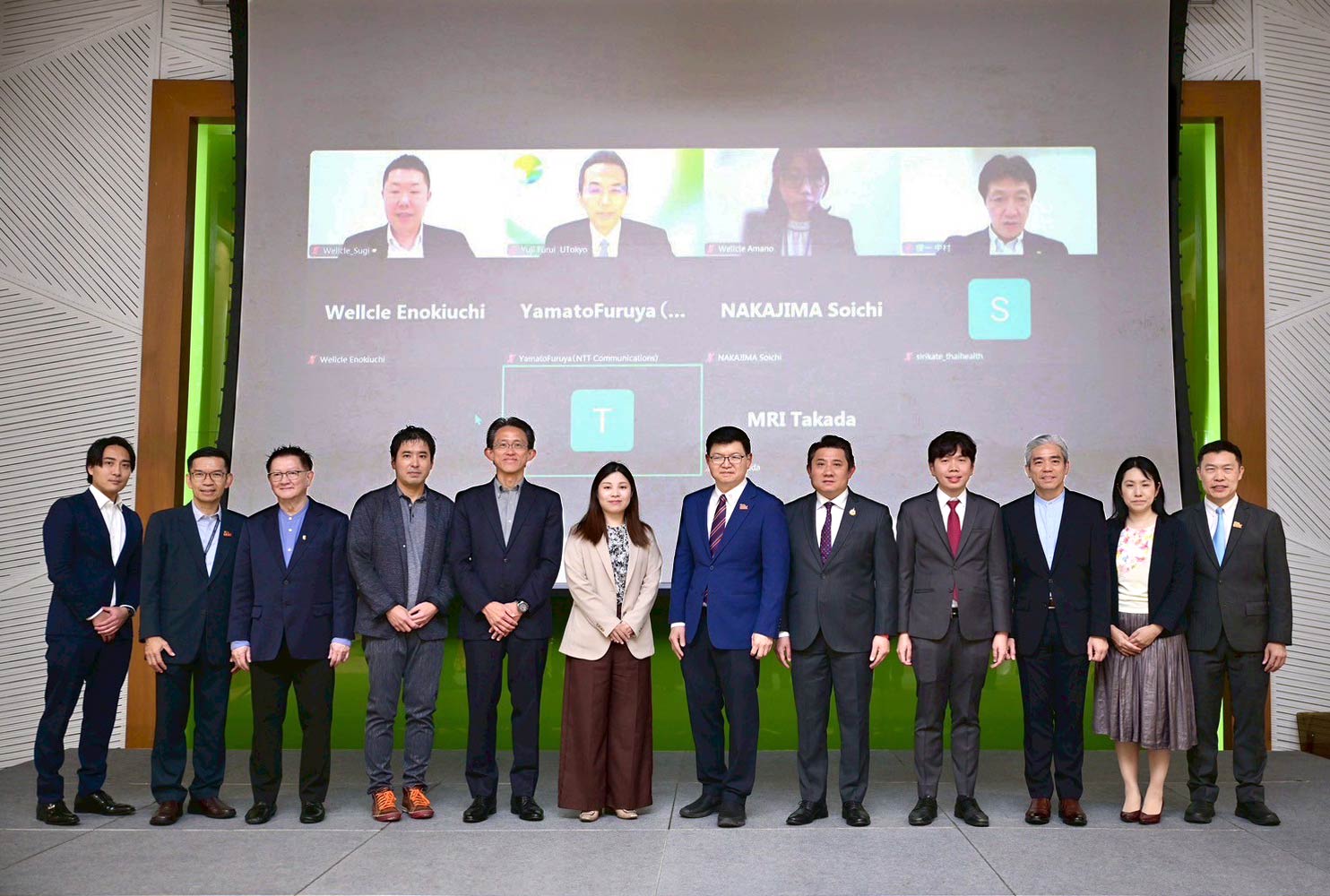
A group photo of the presenters
(source: Mitsubishi Research Institute, Inc.)
(source: Mitsubishi Research Institute, Inc.)
In Thailand, health promotion initiatives are currently being led by the Ministry of Public Health and ThaiHealth. However, there is a growing need to shift toward broader and more sustainable efforts.
“Thailand is following Japan’s path—rapid aging and rising healthcare costs,” said Noriko Kawamura, Mission Leader of Asia Business at Mitsubishi Research Institute. “Japan’s data-driven model, where workplace wellness boosts both health and productivity, built through public-private collaboration, is a potential blueprint for Thailand and the ASEAN region.”
The seminar featured a keynote speech on Japan’s health promotion policies by Dr. Yuji Furui, Project Professor, Institute for Future Initiatives of the University of Tokyo and the Jichi Medical University as well as Dr. Jate Ratanachina, Assistant Professor of the ChulaLongkorn University of Thailand. Japanese industry representatives, including NTT Communications Corporation2 and Wellcle Co., Ltd., presented advanced case studies on the effectiveness of health data utilization.
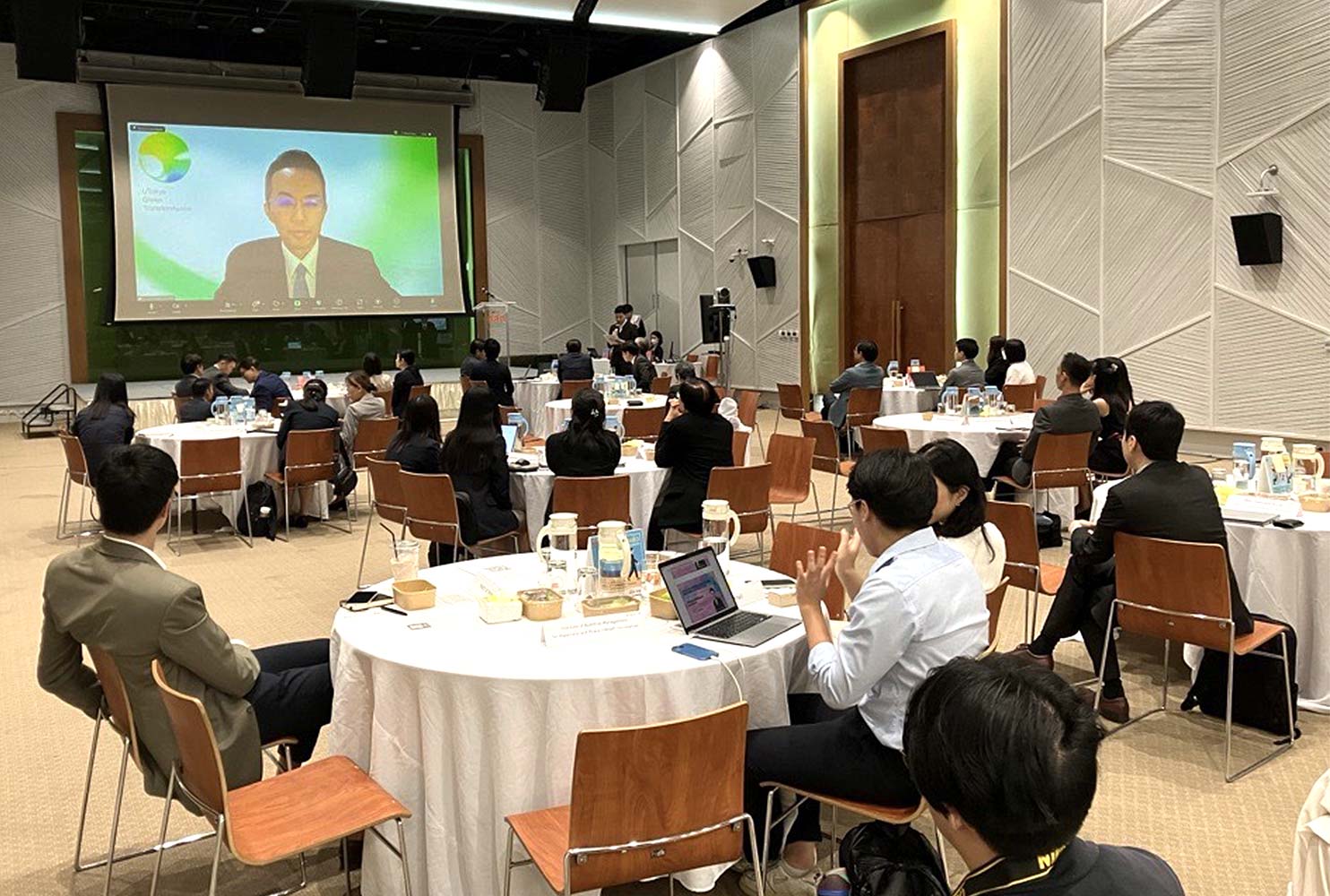
The seminar featured presentations from the public and private sectors
(source: Mitsubishi Research Institute, Inc.)
(source: Mitsubishi Research Institute, Inc.)
Thai industry representatives also shared challenges related to workplace health promotion. In a panel discussion involving business leaders from both Japan and Thailand, participants actively discussed topics such as balancing employee health and productivity, the importance of leveraging healthcare data, and the ideal forms of public–private collaboration.
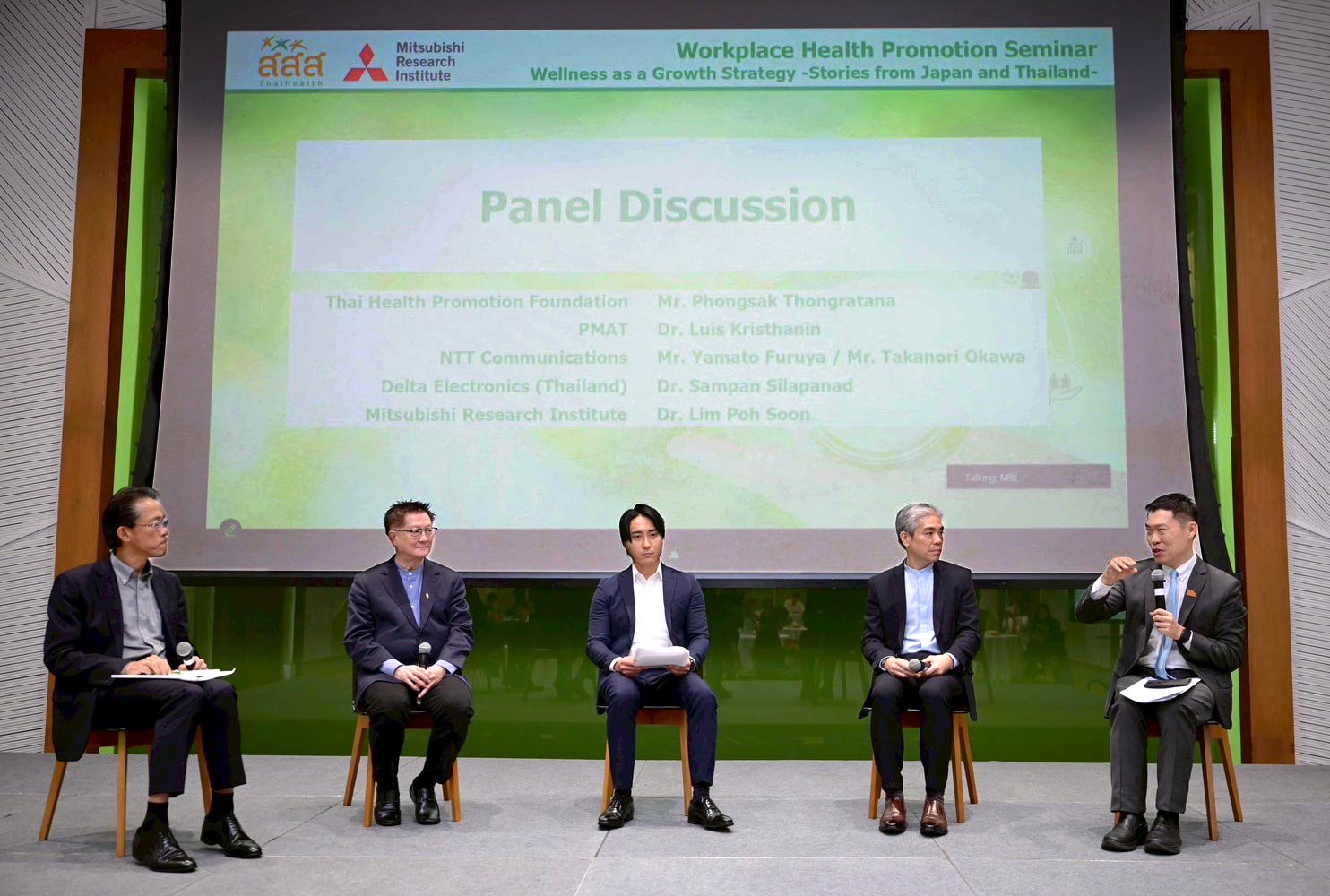
The panel discussion underway
(source: Mitsubishi Research Institute, Inc.)
(source: Mitsubishi Research Institute, Inc.)
In Japan, the concept of health and productivity management has been gaining traction in recent years. This approach aims to balance employee health management with corporate productivity enhancement, recognizing employee well-being as a foundation for economic growth. As a result, companies and local governments are increasingly taking the lead in promoting workplace and local health initiatives.
Much progress has also been made in the development of data infrastructure and ICT tools to accurately assess and improve health conditions. This includes incentive programs that promote behavioral change and systems to encourage healthy behaviors by utilizing health and medical data such as step counts, dietary habits, and medical checkup results. Such initiatives both raise individual health awareness and contribute to improving the overall health level of communities and organizations.
Much progress has also been made in the development of data infrastructure and ICT tools to accurately assess and improve health conditions. This includes incentive programs that promote behavioral change and systems to encourage healthy behaviors by utilizing health and medical data such as step counts, dietary habits, and medical checkup results. Such initiatives both raise individual health awareness and contribute to improving the overall health level of communities and organizations.
1The Ministry of Economy, Trade and Industry of Japan entrusted the operation of the “FY2023 Supplementary Global South Future-Oriented Co-Creation Program” (Master Plan Formulation and Related Research) to PwC Consulting LLC, Tokyo office. As part of this project, Mitsubishi Research Institute, Inc. was selected by PwC Consulting LLC, Tokyo office to carry out a subcontracted study on the formulation of the master plan.
2NTT Communications Corporation will change its name to NTT DOCOMO BUSINESS, Inc. as of July 1, 2025.