
24 February 2026—Mitsubishi Research Institute, Inc. published the results of the demonstration project conducted in Vietnam with AGRI SMILE, Inc. and THE PAN GROUP JOINT STOCK COMPANY. The three firms set out to apply biostimulant materials as a means to counter the effects of climate change by improving fertilizer absorption efficiency in rice production.
Rice yields at the PAN site in Hung Yen Province increased 43% through foliar application of biostimulant materials developed by AGRI SMILE. Building on the current demonstration, the three companies plan to continue preparations for the distribution of biostimulant* materials within Vietnam, expand demonstration activities, and explore applicability to additional crops.
Rice yields at the PAN site in Hung Yen Province increased 43% through foliar application of biostimulant materials developed by AGRI SMILE. Building on the current demonstration, the three companies plan to continue preparations for the distribution of biostimulant* materials within Vietnam, expand demonstration activities, and explore applicability to additional crops.
*Biostimulants are agricultural materials that activate the immune system of plants when applied on them
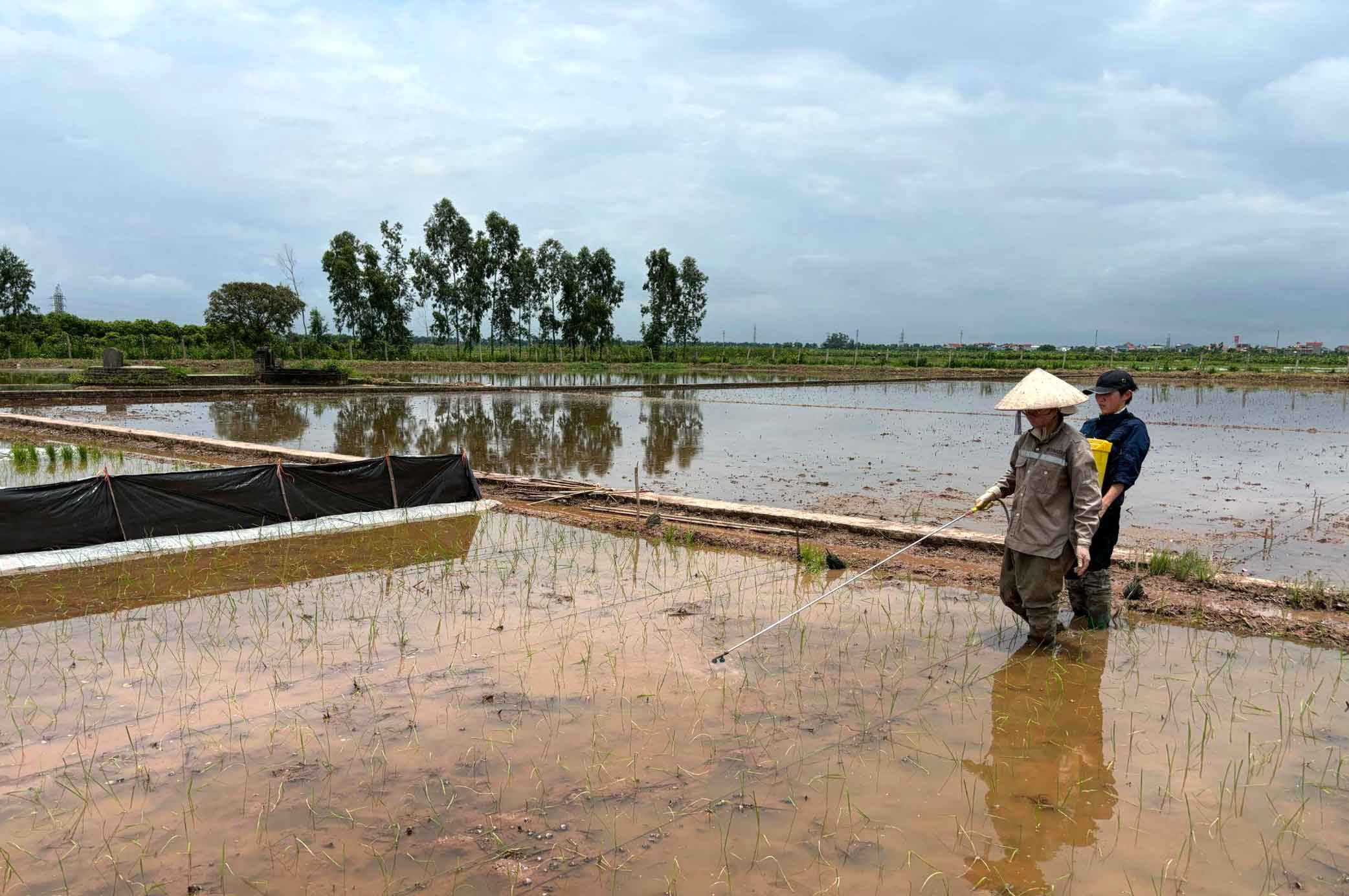
Demonstration field before planting in Hung Yen Province, Northern Vietnam

Scene from harvest: Normal fertilization with biostimulant application (left plot) and without biostimulant application (right plot)
“Achieving clear results in rice, a key staple crop, is particularly significant,” said Takahide Kubota, leader for the project at Mitsubishi Research Institute. “The results suggest that this approach can support stable rice production under climate change conditions while enhancing agricultural productivity.”
The team set their sights on tropical and subtropical environments, namely the Hung Yen Province in northern Vietnam, and evaluated the effectiveness of biostimulant materials in fertilizer absorption efficiency and countering the effects of climate change. Biostimulant materials, applied by spraying, serve to activate a plant’s immune system, and AGRI SMILE provided the materials for the project.
The demonstration was conducted at a field managed by PAN in Hung Yen Province, Vietnam, targeting rice cultivation from June to October 2025. A controlled field trial was implemented on approximately 12 ares using a two-by-two experimental design comprising four plots, based on the presence or absence of biostimulant application and fertilizer reduction.
As a result, the biostimulant application improved heat tolerance and root development, and increased rice yields by a factor of 1.43. When converted to a per-hectare basis, this translated into an increase in profit of VND 40.2 million and a benefit–cost ratio of 6.1.
Demonstration results
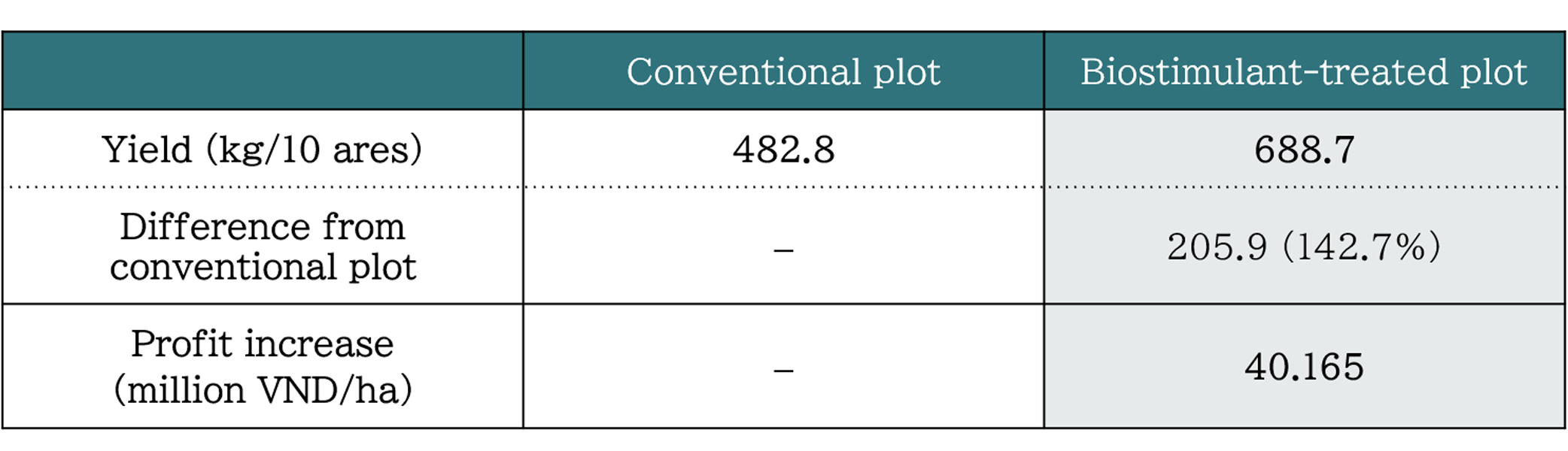
Note: Except for the application of biostimulants, all fertilization, pest control, and water management practices were conducted under identical conditions, and the demonstration was carried out in adjacent fields with buffer zones established. Soil tests were conducted at the outset to confirm that soil conditions were comparable across plots