
The curtain fell on Expo 2025 Osaka, Kansai, Japan (the Osaka–Kansai Expo) in October 2025. With its latest iteration in Japan, the World Expo has evolved from a traditional exhibition space into a social phenomenon in the urban space co-created by visitors and residents alike. The Osaka–Kansai Expo featured numerous new approaches that challenged and transformed conventional perceptions of the World Expo. Here, I will rethink the Expo, positing and answering, “What are Expos supposed to be? And what role did the Osaka–Kansai Expo fulfill?” To do so, I will share about my involvement in the Osaka–Kansai Expo—spanning its planning, on-site operations, and legacy development—as a Mitsubishi Research Institute consultant.
Rethinking the World Expo: Osaka–Kansai insights
From closed celebration to community-centric cultural lab in the urban space
27 February 2026
Who I am: My experiences and the perspective they garner for rethinking the World Expo
Ever since the decision to host the Osaka–Kansai Expo in 2018, I have contributed to the event through several roles, beginning with the Mitsubishi Research Institute’s Expo Promotion Office, followed by positions with Osaka Prefecture and the Exposition Association, and currently as a board member at demo!expo. More than seven years of collaboration—spanning the initial planning, on-site operations, and legacy phases—has enabled me to critically reflect on the concept of Expos beyond the scope of a single project. Drawing from insights gained throughout the three key stages—planning (pre-Expo), operations (mid-Expo), and legacy development (post-Expo)—I want to offer my personal perspective on redefining the significance of Expos.
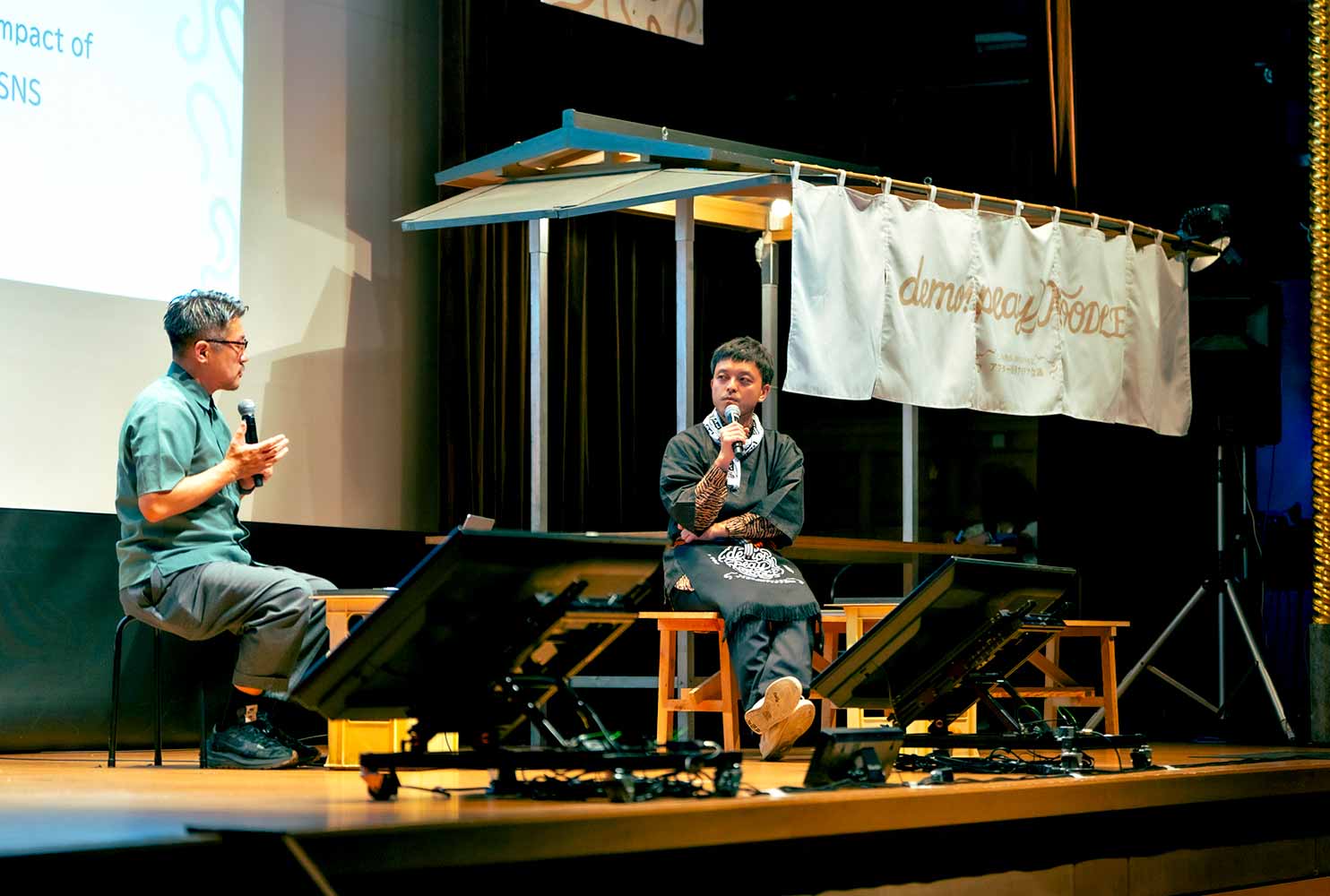
A discussion at an event for contemplating the Osaka–Kansai Expo’s legacy
Pre-Expo: Changes at the planning stage
Traditionally known as World Expositions, Expos were once a venue for nations to showcase their industrial and technological achievements. But in the 21st century, as societal issues diversify and values shift, it’s becoming clear that government-led solutions alone are not enough. Since 2018, the focus in planning has shifted from trying to create an event for all nations to one for all people to participate in; i.e. emphasis moved beyond states and companies to broader participation. This can be seen in the eight “theme project producers” who each interpreted the Osaka–Kansai Expo’s keynote theme—life—in unique ways to highlight this inclusivity.
Drivers of this transition are the range of global challenges typified by SDGs—climate crisis, demographic shifts, infectious disease control, social and economic inequities, respect for diversity. Such problems cannot be resolved by simply vying for national prestige; instead, people—individuals—need to transcend organizational boundaries, take ownership of issues, and personally act to help fix things. That context means Expos, too, need to evolve from being events like services that people merely consume to become collaborative platforms for co-creation. That means greater emphasis on relevant populations—seeking the active contribution of visitors, local residents, and even participants from afar—is needed when it comes to shaping Expos.
This has traditionally tended to be a closed affair involving only organizers and exhibitors; in contrast, from the beginning of the planning stage, Osaka–Kansai Expo’s emphasis was on having the processes be open to local urban spaces and the residents that lead their lives there. It was not open to just the venue at Yumeshima (an artificial island), but an attempt was made to make it open to the people of Osaka—and even the whole Kansai region. I tried to play a role in connecting the venue and the city, visitors and residents, through various outreach programs and projects like Machigoto Expo and Expo Sakaba. The expansion to derivative creatives (like the logo and the Myaku-Myaku mascot)—something that was distinctive of this expo—became symbolic: Here we had spawned a new vision of what Expos could be, transitioning from closed festival for a few to an open cultural lab.
A welcoming Myaku-Myaku mascot

Mid-Expo: Changes at the operations stage
When the Expo got started, what caught my attention most was that it had developed a new feature—it had become an “social-media expo.” Expos of the past generally took place at a venue only those who visited could experience; but the Osaka–Kansai Expo, a child of the 2020s, spread outward, beyond the venue’s physical limits, through social media, and that spread greatly shaped public opinion and influenced visitor numbers. News of what was going on and people’s experiences, both good and bad, were instantly shared far and wide. This made transparency about the event all the more crucial, as it put conditions at the venue and how they were being dealt with squarely into the public eye.
That constituted an opportunity for improvement as well as a risk. By making criticisms and people’s wishes visible, it forced venue management to take immediate steps to address problems. Residents were no longer just visitors; they were now co-creators involved in improving the Expo. More than once posts about waiting times at some pavilions led to operational improvements, and there were instances of opinions expressed via social media leading to the launch of new events. Some posts even prompted other visitors to seek out interesting exhibits or picturesque locations, in effect creating several popular spots. This feedback-and-response loop is a quality not seen at previous expos.
A further spillover was that social media expanded participation to a broader range of demographics. With visitors posting live from the Expo, even people unable to make it to the venue got a chance to share in the experience, with many taking part in discussions, making suggestions, and offering criticisms from afar. This fostered a dynamism in which planners, operators, and visitors all influenced one another. Here, we can see how the Expo transitioned from being a unilateral exhibition to an interactive social phenomenon that all could participate in.
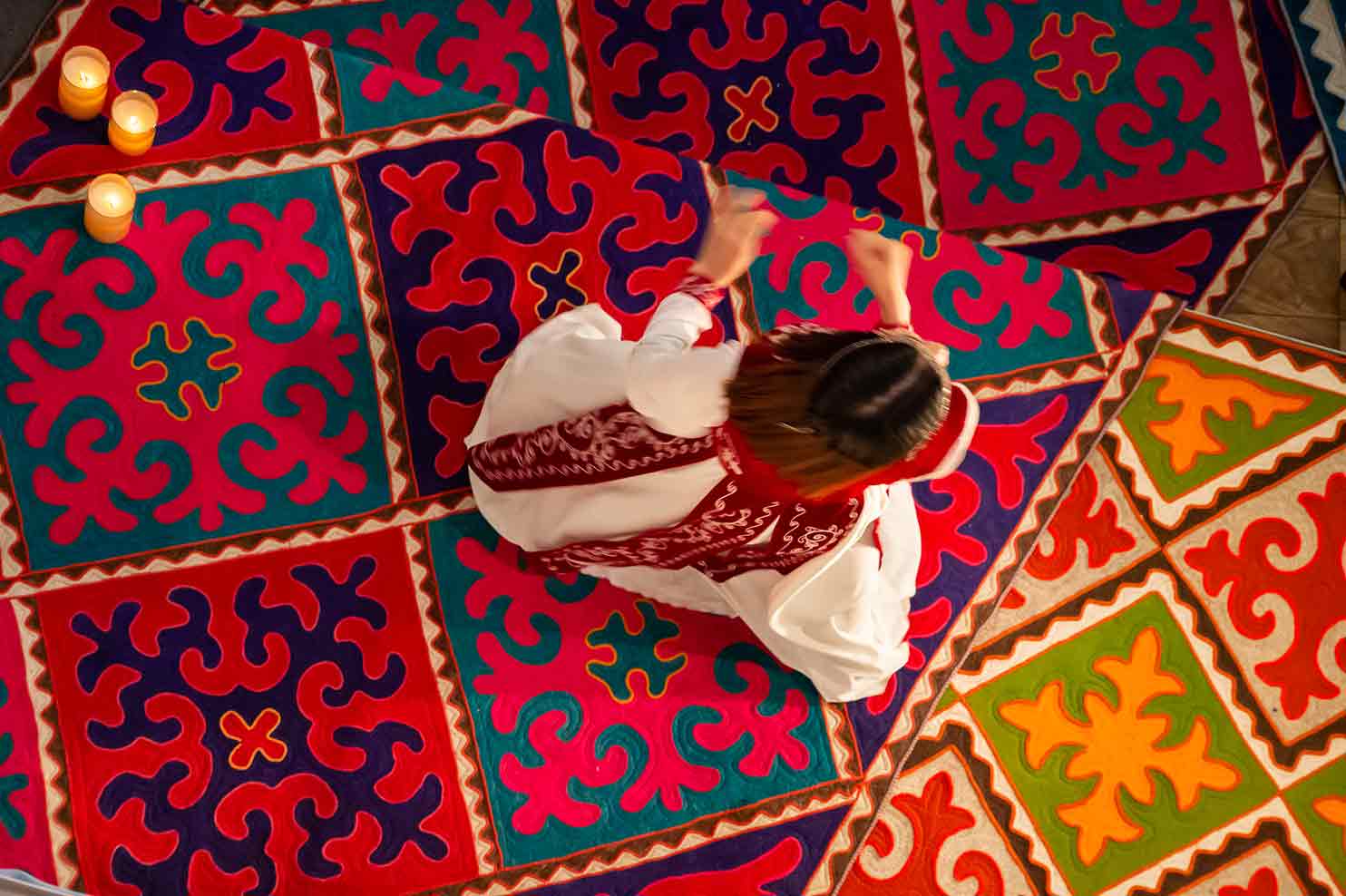
Dancers from the Kyrgyz Republic mesmerize an audience
Post-Expo: Changes at the legacy stage
Finally, we come to how this experience will live on when the Expo is over. From the perspective of the Osaka–Kansai Expo’s legacy, deliberations on how to preserve the pavilions and the structures typified by the large wood ring with its grand roof, are of course important, and the Expo’s new Myaku City initiative is promoting the reuse of many items associated with it. But parallel to these moves is equally important the discussion of the Expo’s soft legacy: specifically, about the need to make it a lasting co-creative mechanism rooted in society, rather than just letting the Expo fade into memory like any other once-off celebration. For Osaka as a city, that legacy will be a living culture of exchange connecting the region to rest of the world and an ongoing cultivation of a spirit of co-creation. Resident-led attempts at co-created events indicate that such co-creation is likely to continue long after the Expo ends.
The important thing here is to expand the central role in creating and convening Expos from governments or countries, to residents. With the Osaka–Kansai Expo, residents took center stage, taking initiative to participate in creating the Expo and gaining experience in co-creating. Leaving these processes as a legacy enables their use for future international events and community building. For example, younger cohorts’ experience of meeting peers from around the world and building border-straddling networks will surely work positively for their future careers and community activities.
Expos should not be one-time experiments for the future, but rather a forum with the continuity to co-create into the future. In particular Osaka, which hosted this iteration, is being called on to carry on the keynote concept, be a testing ground for future society, and demonstrate its presence as a testing ground representing Japan, and Asia. If, drawing on the Osaka–Kansai Expo experience, future expos can be transformed into events for developing a culture of co-creation rooted in the host city and open to the whole world, they can go beyond being just once-off events to become harbingers of societal change.
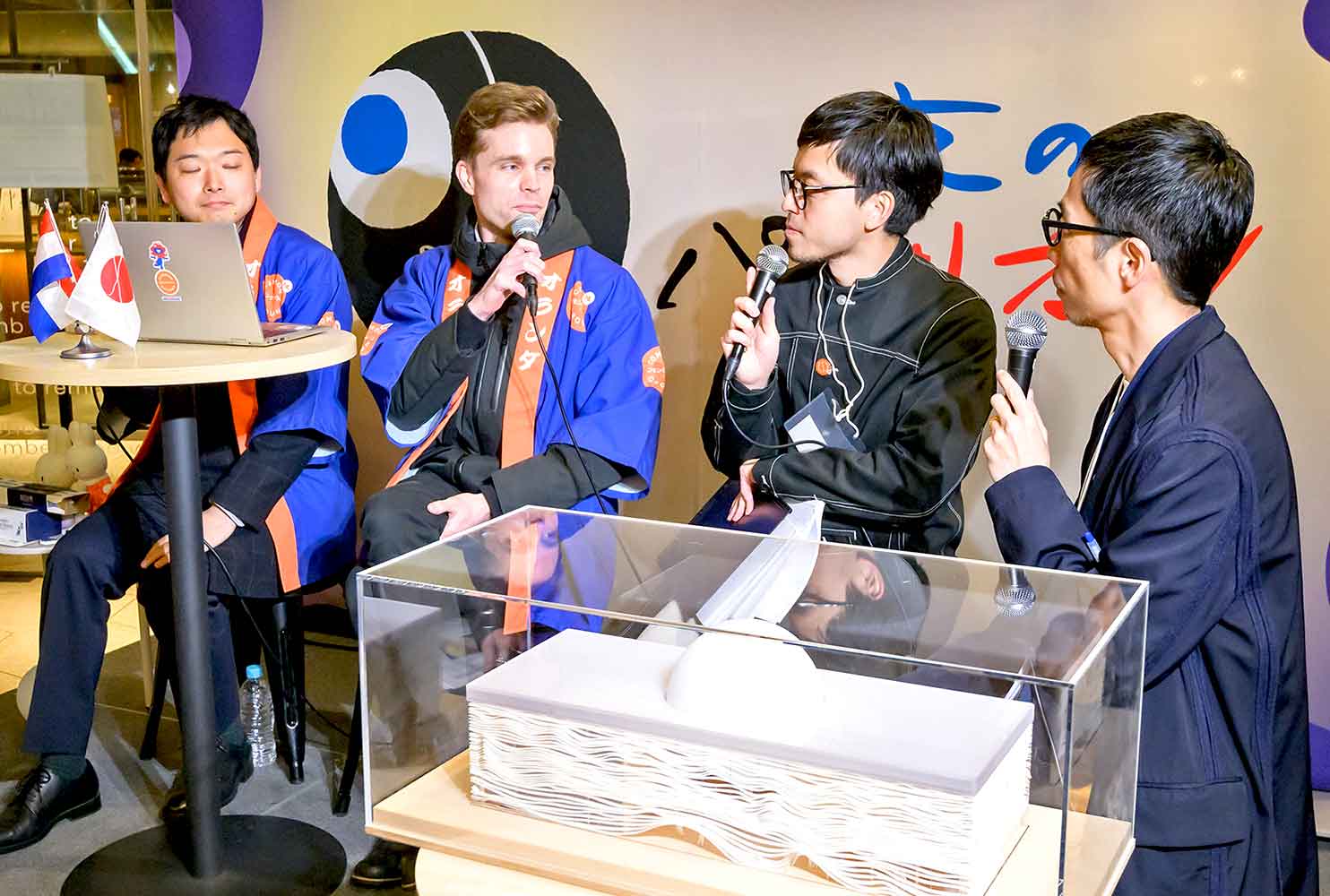
Discussing the event with the Holland Pavillion team
Conclusion: Evolution of expos into community-centric cultural labs in the urban space
Redefining expos does not mean revising exhibition methods and systems. It is a process of re-examining who the main character is. Once dominated by government and corporate interests, Expos are evolving into a platform for getting residents and individuals involved in co-creation. They will go from being fairs for showing off technology and national prowess to being venues for co-creating the future; from a closed festival-like affair to a community-centric cultural testing ground in the urban space. Having taken this path, the Osaka–Kansai Expo showed the world what the next era of Expos will look like.
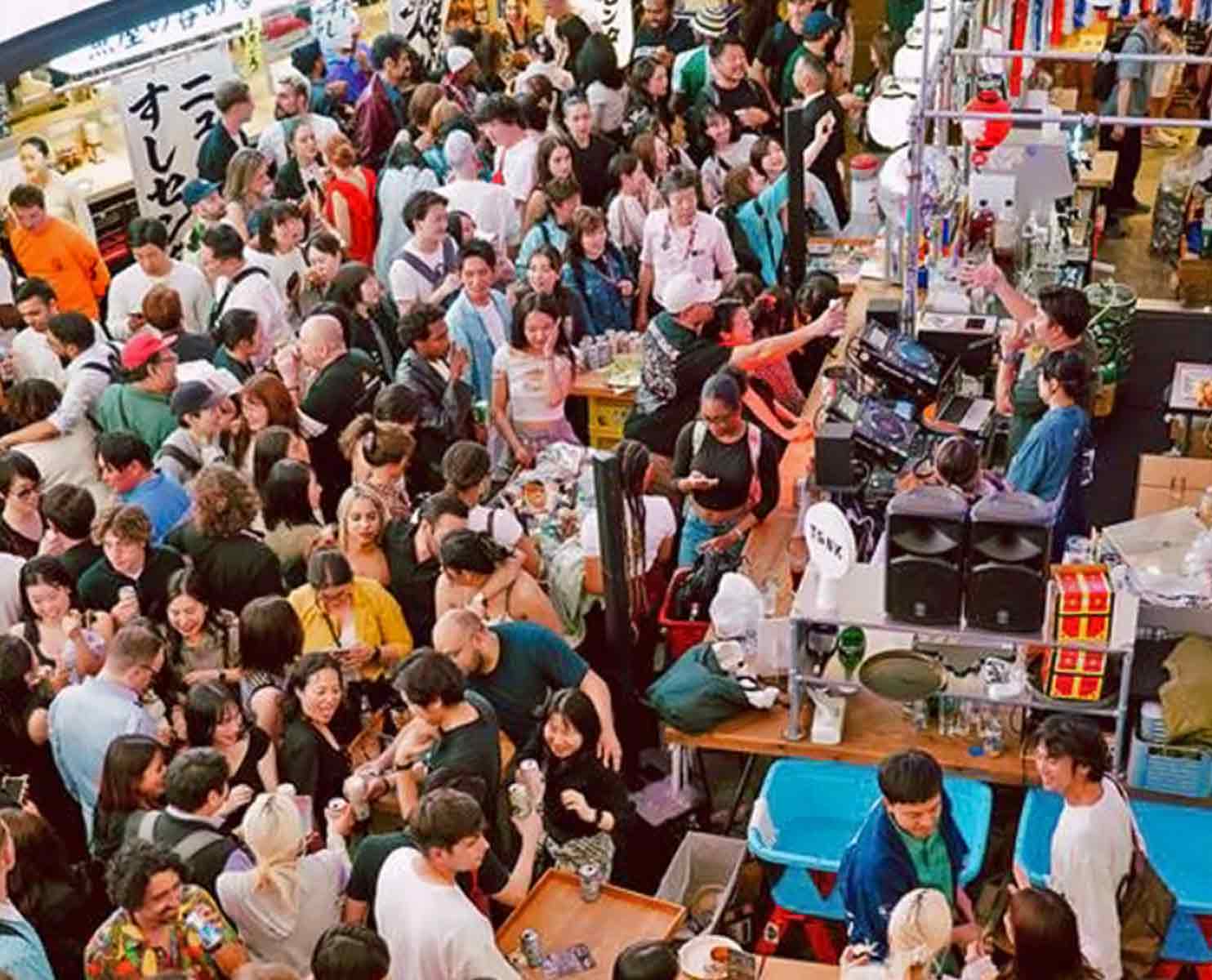
Staff members of over 50 national pavilions gather for Expo Kampai Night
Author profile
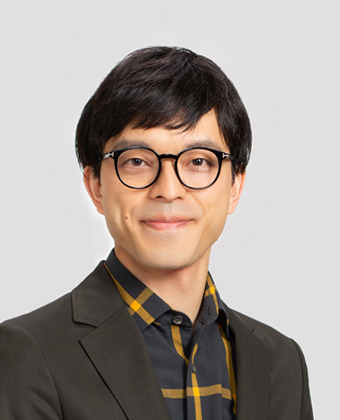
Harutoshi Imamura
World Expo Office Leader
Harutoshi Imamura specializes in public–private partnerships centered on the Expo and takes on the role of producer, particularly in creative collaborations, when crafting new business ventures. In his previous job, he worked for the Osaka Prefectural Office, and he took on a secondary position at the Japan Association for the 2025 World Exposition after joining Mitsubishi Research Institute. At the Expo Association, he was involved in creating the Expo’s logo and getting the Team Expo 2025 program off the ground. He also has experience in the planning and co-creation of promotion projects with several outside partners in conjunction with the 2025 Osaka–Kansai Expo.