





トランプ外交は、一代限りの例外なのか。第2次トランプ政権は、自由貿易、「世界の警察官」としての役割、国際協調、という戦後米国外交の基本姿勢を見直し、米国第一主義への転換を進めている。その背景にあるのは、トランプ大統領個人の思想だけではない。中国の台頭と米国産業基盤の脆弱化、格差拡大に伴う米国民の国内優先志向の強まり、政治的分極化など、米国社会・経済に根差した構造的な圧力である。こうした圧力が残る限り、ポスト・トランプにおいても米国外交がかつての姿に全面的に回帰する可能性は低い。今回のコラムでは、国際主義の三本柱に働く修正圧力を整理し、米国の対外政策の潮流をひも解く。
タグから探す
2026年10月05日

リベラル国際秩序に対する構造的な修正圧力
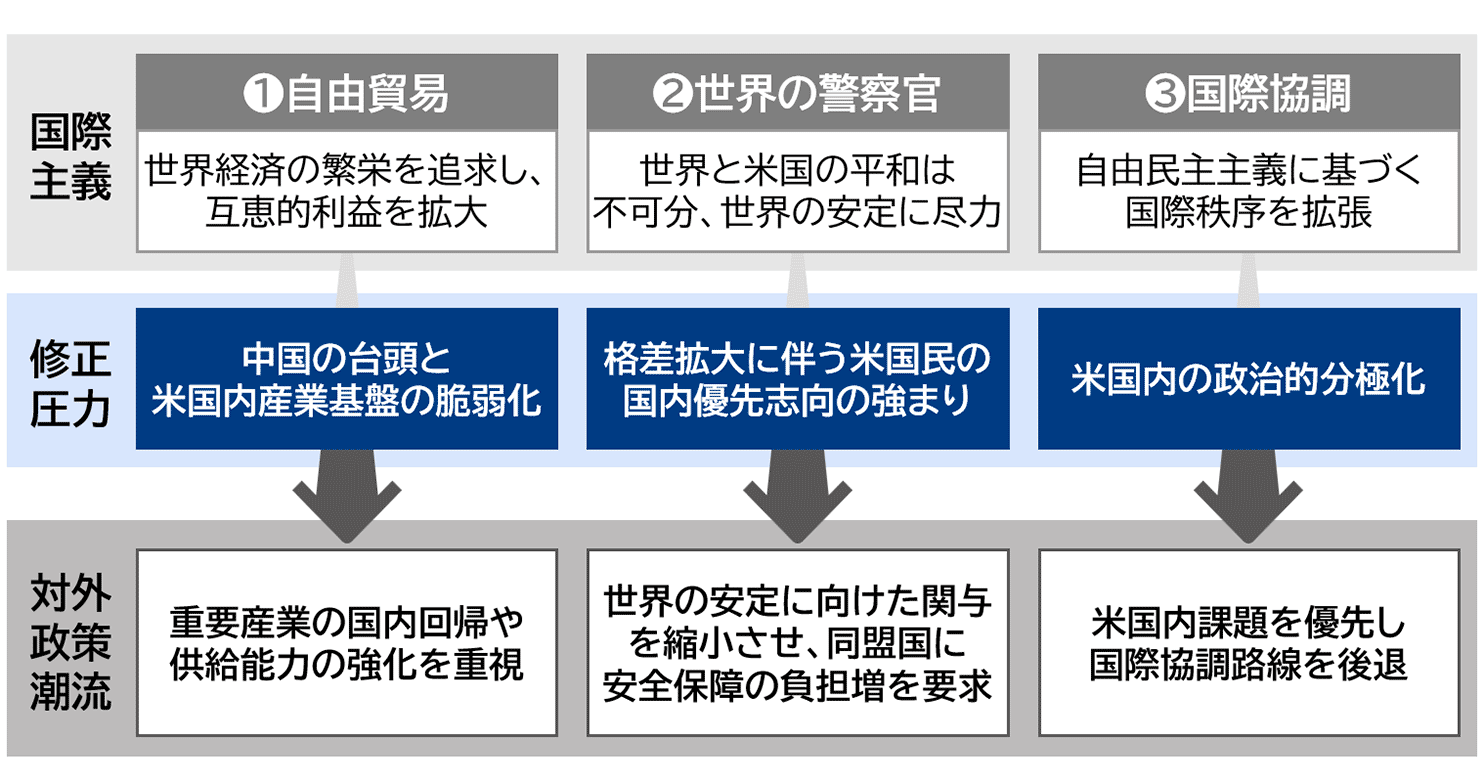
発足から1年半、第2次トランプ政権は、戦後の米国外交の基盤である国際主義(①自由貿易、②「世界の警察官」としての役割、③国際協調)から米国第一主義への転換を進め、米国が築いてきたリベラル国際秩序を自ら揺るがしている(図表1)。
図表1 米国の戦後国際主義とトランプ2.0下の「米国第一主義」
出所:中西寛(2026)、Ikenberry(2005、2018)、その他各種資料を基に三菱総合研究所作成
①について、米国は自国の安全保障と世界経済の繁栄を表裏一体のものと捉え、自由貿易体制を推進してきた。しかし、トランプ政権は、米国は不公正・不均衡・非相互的な世界貿易の犠牲者であるとの認識に立ち、高関税を梃(てこ)に二国間交渉を迫り、米国に有利な通商関係への見直しを進めている。
②について、米国は世界各地に同盟網を張り巡らせ、海上交通路の安全確保や国際制度の維持といった国際公共財を提供し、世界の安定を支えてきた。これに対しトランプ政権は、「米国がアトラス(ギリシャ神話の巨神)のように世界秩序全体を支えてきた時代は終わった」とし、同盟国に自地域の安全保障に対する責任と防衛費負担を大幅に増やすよう求めている。
③について、米国は国際機関を通じた多国間協調や、価値観を共有する同盟国・友好国への支援を通じ、自由民主主義に基づく国際秩序の拡大を主導してきた。しかし、トランプ政権は約70の国際機関からの脱退や資金拠出停止の意向を示しているほか※1、ルールや民主主義といった価値よりも、「力と利益」に基づく国際関係を重視している。
トランプ政権はなぜ、国際主義を否定し、米国第一主義への転換を進めているのか。背景には、国際主義に対する構造的な修正圧力がある(図表1)。冷戦終結後、唯一の超大国となった米国は、国際主義に基づくリベラル国際秩序を世界へと拡大してきた。しかし、その過程で、製造基盤の脆弱化や米国内の格差拡大など、国際主義に伴うひずみも顕在化した。
米国第一主義は、構造的要因から生じたものであり、ポスト・トランプの対外政策にも影響を及ぼし続けるだろう。以下では、国際主義の三本柱に対する3つの修正圧力(①中国の台頭と米国内産業基盤の脆弱化、②米国民の国内優先志向の強まり、③米国内の政治的分極化)を整理し、米国の対外政策の潮流を論じる。
中国の台頭と米国内産業基盤の脆弱化
第1に、中国の台頭と米国内産業基盤の脆弱化である。冷戦終結後、米国は自由貿易と市場経済の拡大を通じた国際経済秩序の構築を推進した。1993年に発足したクリントン政権は、雇用や生産拠点の海外流出を懸念する民主党議員らの反対が根強い中、1994年にNAFTA(北米自由貿易協定、現在のUSMCAの前身)を発効させた。1995年には、欧州共同体(EC、現在のEUの前身)などとともにWTO(世界貿易機関)の発足を主導し、貿易・投資のグローバル化を一段と推進した。さらに米国は、中国を国際的な貿易ルールに組み込み、平和的な行動を促すことを企図した対中「関与政策」のもと、中国のWTO加盟を後押しし、中国は2001年に加盟を果たした。
貿易・投資の自由化は、米国経済の成長を支えた一方、中国の急速な産業高度化を促し、米国内の生産・供給基盤を弱める一因にもなった。ハーバード大学の「製品複雑性指数」に基づき、自動車や電気機械など複雑性の高い品目の世界輸出に占める各国のシェアを試算すると、中国のシェアは2000年代以降大幅に上昇し、2024年には2割を超えた。これに対し、米国や日本、ドイツのシェアは大きく低下している。先進国が優位を保ってきた高付加価値分野でも、中国の存在感が急速に高まっている(図表2)。
貿易・投資の自由化は、米国経済の成長を支えた一方、中国の急速な産業高度化を促し、米国内の生産・供給基盤を弱める一因にもなった。ハーバード大学の「製品複雑性指数」に基づき、自動車や電気機械など複雑性の高い品目の世界輸出に占める各国のシェアを試算すると、中国のシェアは2000年代以降大幅に上昇し、2024年には2割を超えた。これに対し、米国や日本、ドイツのシェアは大きく低下している。先進国が優位を保ってきた高付加価値分野でも、中国の存在感が急速に高まっている(図表2)。
図表2 世界の輸出額に占める各国のシェア(製品の複雑性別)
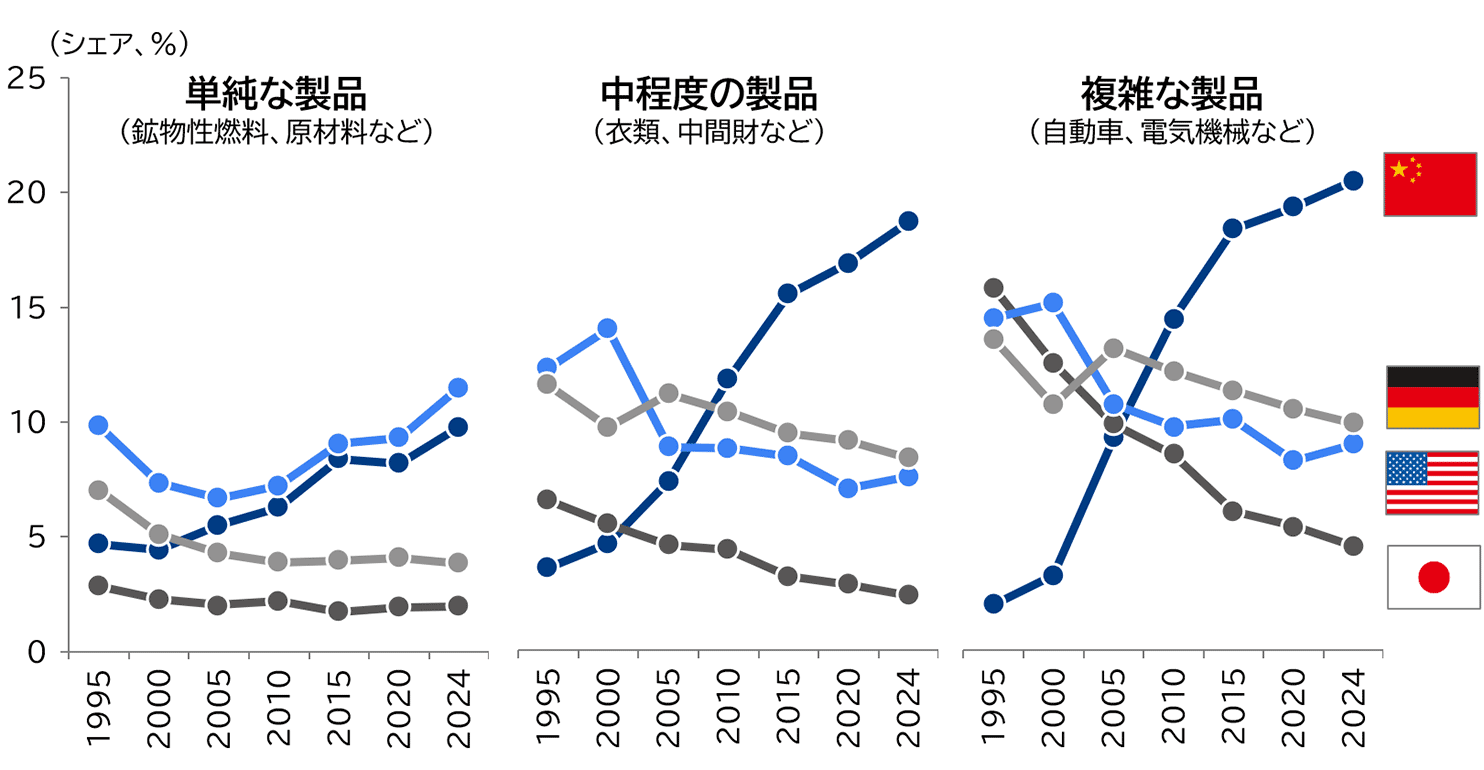
注:2024年の製品複雑性指数(PCI:Product Complexity Index)の順位をもとに、各製品を分類(各約33%)。約1,200品目が対象。
出所:UN Comtrade 、ハーバード大学Growth Labを基に三菱総合研究所作成
出所:UN Comtrade 、ハーバード大学Growth Labを基に三菱総合研究所作成
米国内製造基盤の脆弱化は、①製造業の衰退によって取り残された地域・中間層への対応、②国家安全保障上の懸念の払しょく、という2つの観点から、米国の政策志向を自由貿易から保護主義へと傾斜させる要因となっている。
①について、米国の所得階層別の実質所得成長率を見ると、1950~1990年では、所得下位20~80%に位置する中間層の所得が相対的に大きく伸びていた。しかし、グローバリゼーションが急速に進展した1990年以降は、高所得層の所得の伸びが加速する一方、低・中所得層の伸びは低位にとどまった(図表3)。とりわけ、製造業への依存度が高く、サービス業などへの雇用移行が十分に進まなかった※2ラストベルト地域などでは、中間層の暮らし向きが悪化し、自由貿易に対する不満が蓄積した。もっとも、格差拡大や製造業雇用の減少をグローバリゼーションだけに帰することはできず、自動化など技術進歩の影響も大きい。自動化の進展を踏まえれば、製造業の国内回帰がかつてと同規模の雇用創出につながるとも限らない。それでも、これらの地域には大統領選の勝敗を左右する接戦州が多く、製造業の国内回帰や雇用保護は、取り残された地域への対応を示す政治的な意味を持つ。こうした背景から、自由貿易を推進する政策は政治的支持を得にくくなっている。
①について、米国の所得階層別の実質所得成長率を見ると、1950~1990年では、所得下位20~80%に位置する中間層の所得が相対的に大きく伸びていた。しかし、グローバリゼーションが急速に進展した1990年以降は、高所得層の所得の伸びが加速する一方、低・中所得層の伸びは低位にとどまった(図表3)。とりわけ、製造業への依存度が高く、サービス業などへの雇用移行が十分に進まなかった※2ラストベルト地域などでは、中間層の暮らし向きが悪化し、自由貿易に対する不満が蓄積した。もっとも、格差拡大や製造業雇用の減少をグローバリゼーションだけに帰することはできず、自動化など技術進歩の影響も大きい。自動化の進展を踏まえれば、製造業の国内回帰がかつてと同規模の雇用創出につながるとも限らない。それでも、これらの地域には大統領選の勝敗を左右する接戦州が多く、製造業の国内回帰や雇用保護は、取り残された地域への対応を示す政治的な意味を持つ。こうした背景から、自由貿易を推進する政策は政治的支持を得にくくなっている。
図表3 米国内の所得階層別の所得成長率
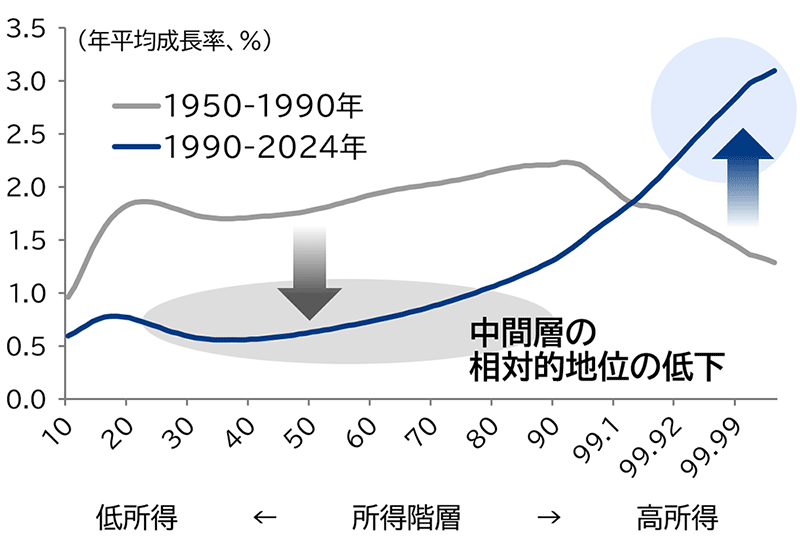
注:横軸は米国内の所得分布における所得階層、縦軸は各階層の実質所得の年平均伸び率を示す。所得は税引前国民所得、成人・等分割ベース。
出所:World Inequality Databaseを基に三菱総合研究所作成
出所:World Inequality Databaseを基に三菱総合研究所作成
一方、②については、国家安全保障上重要な製品・物資の国内生産能力を確保する動きが強まっている。米国の重要戦略分野での貿易制限措置の件数は、第1次トランプ政権以降、増加基調に転じている(図表4、左)。バイデン政権が補助金や税制優遇を通じた産業政策を重視したのに対し、第2次トランプ政権は関税措置を多用しており、政権によって政策手段は異なる(図表4、右)。また、トランプ関税には、対外交渉の手段としての側面が強いものも少なくない。それでも、重要産業の国内回帰や供給能力の強化を重視する方向性は、政権を超えて共有されている。
図表4 米国の重要戦略分野の貿易制限措置
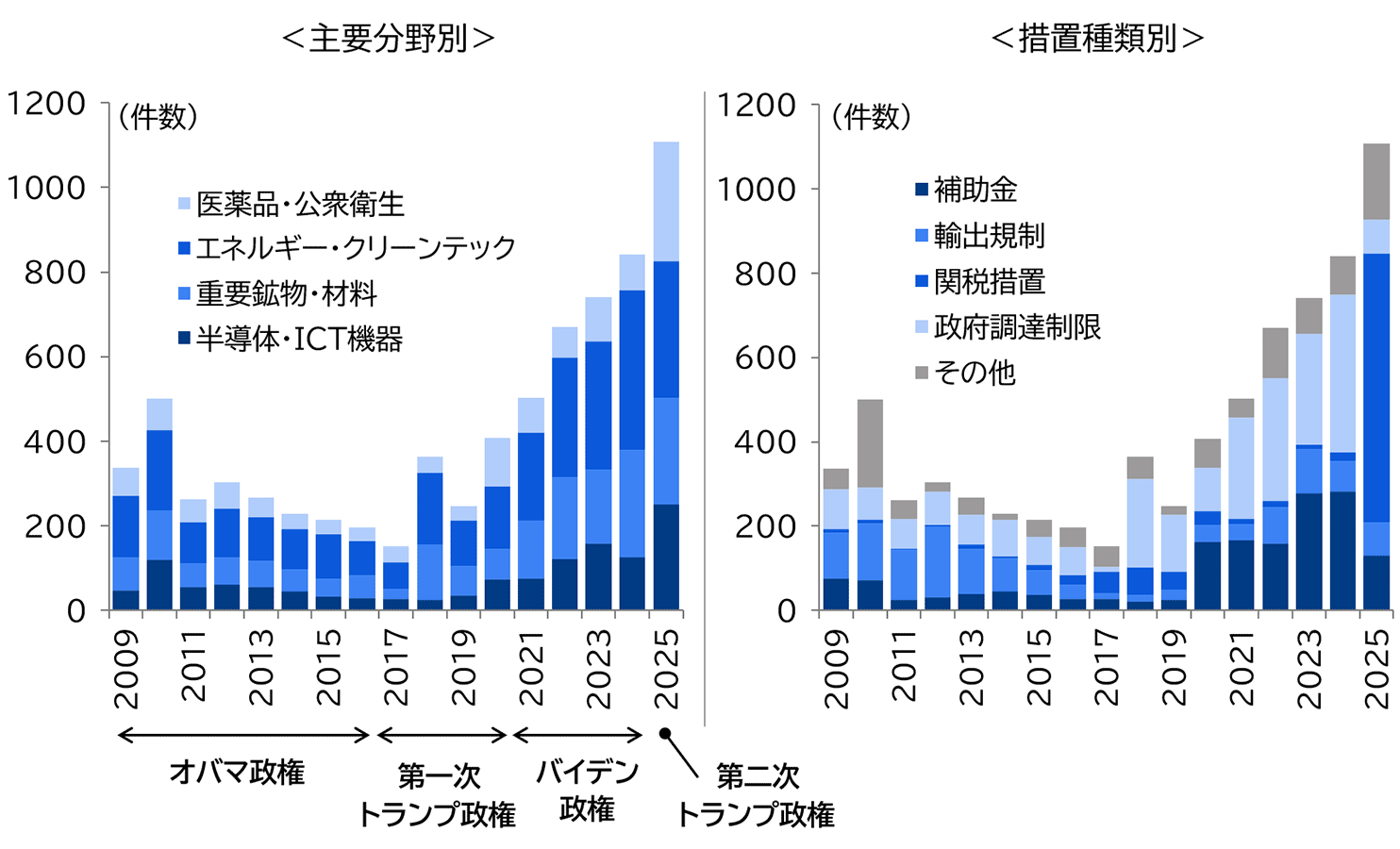
注:米国が実施した有害措置を、政策変更単位・発表年ベースで集計。分野分類は、米国商務省“Draft List of Critical Supply Chains” の戦略物資HSコード表(米国HTS8/10桁)をHS6桁に集約。1件の措置が複数分野に該当する場合は各分野に重複計上しているほか、HS6桁への集約に伴い、対象外品目が一部含まれる可能性がある。
出所:Global Trade Alert、米国商務省“Draft List of Critical Supply Chains”を基に三菱総合研究所作成
出所:Global Trade Alert、米国商務省“Draft List of Critical Supply Chains”を基に三菱総合研究所作成
米国民の国内優先志向の強まり
第2に、米国民の国内優先志向の強まりである。その契機となったのが、2001年の米同時多発テロ(9.11)を受け、G.W.ブッシュ政権が開始した「テロとの戦い」である。テロとの戦いのコストを分析している米ブラウン大学ワトソン国際・公共問題研究所の「戦争のコスト」プロジェクト※3によれば、9.11以降、米国が対テロ作戦を展開してきた国は約80カ国に及び、その費用総額は8兆ドルに達する。戦闘によって命を落とした米兵は7,000人を超え、敵対勢力や現地の民間人を含めた死者数は、直接・間接を合わせれば数百万人規模に上る。
こうしたテロとの戦いに伴う人的・財政的負担や、2008年の世界金融危機後にいっそう深刻化した中間層の暮らし向きの悪化は、米国民の間で、対外関与よりも内政を優先すべきとの考え方を強める一因となった。実際、米国民の国際情勢に対するスタンスの経年変化を見ると、2000年代以降、無党派層では「米国は国際情勢から距離を置くべき」とする回答割合が上昇傾向に転じ、世界金融危機後には共和党支持層でも同様の傾向が強まっていった(図表5)。
こうしたテロとの戦いに伴う人的・財政的負担や、2008年の世界金融危機後にいっそう深刻化した中間層の暮らし向きの悪化は、米国民の間で、対外関与よりも内政を優先すべきとの考え方を強める一因となった。実際、米国民の国際情勢に対するスタンスの経年変化を見ると、2000年代以降、無党派層では「米国は国際情勢から距離を置くべき」とする回答割合が上昇傾向に転じ、世界金融危機後には共和党支持層でも同様の傾向が強まっていった(図表5)。
図表5 米国民の国際情勢に対するスタンス
「米国は国際情勢に積極的に関与する方がよいか、それとも関与を控える方がよいか」
「米国は国際情勢に積極的に関与する方がよいか、それとも関与を控える方がよいか」
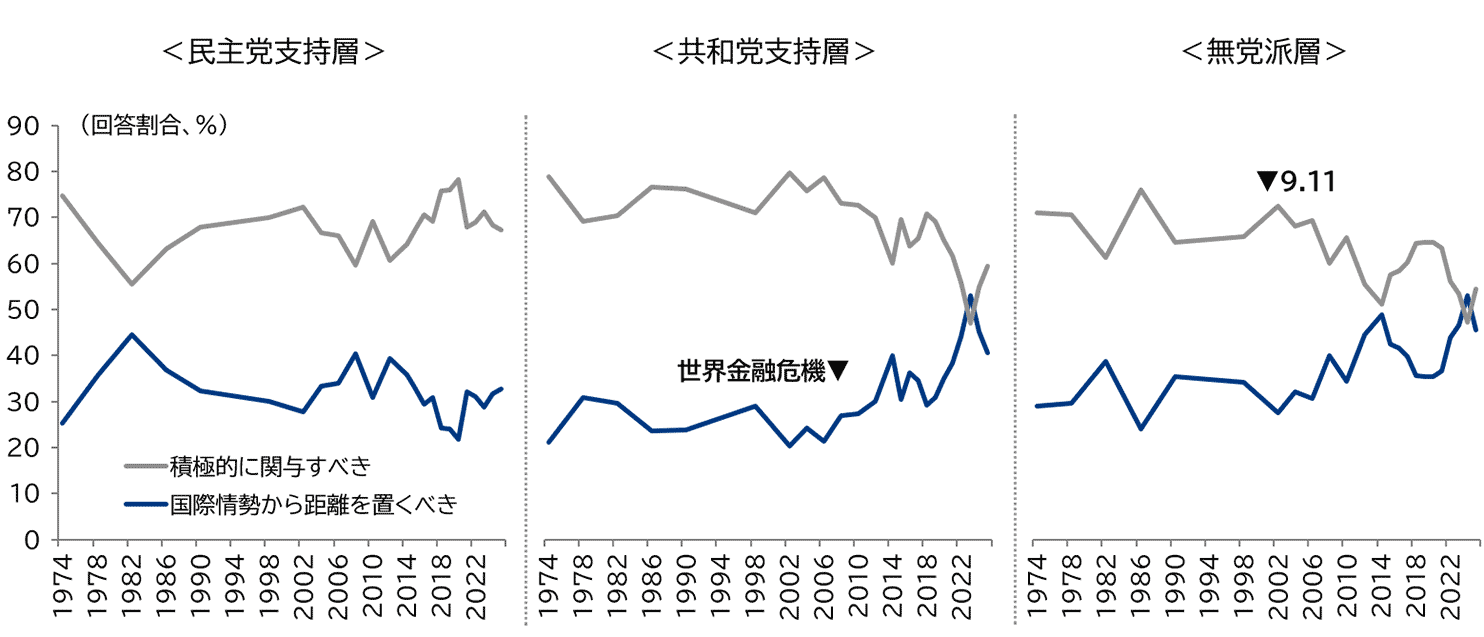
注:直近は2025年。
出所:Chicago Council on Global Affairs資料を基に三菱総合研究所作成
出所:Chicago Council on Global Affairs資料を基に三菱総合研究所作成
こうした世論の変化を背景に、米国の安全保障政策は、世界の安定を広く担う姿勢から、自国利益を重視した選択的な関与へと傾斜している。オバマ大統領が「米国は世界の警察官ではない」と表明したこと※4は、積極的な対外関与を抑制し、同盟国により大きな役割を求める方向への転換を示すものだった。第2次トランプ政権は、国家安全保障戦略(NSS2025)※5で「負担分担と負担転嫁」を掲げ、同盟国・パートナーに自地域の安全保障と集団防衛への貢献拡大を求める方針を明確にしている。たしかに、2026年初の対ベネズエラ攻撃や、2月末からのイスラエルとの対イラン攻撃にみられるように、軍事力の行使そのものを抑制しているわけではない。だが、前者は西半球での米国の優位性確保を主眼とした介入であり、後者は政権内に慎重論がある中でトランプ大統領自身の判断が色濃く反映された介入であったとされ※6、その最終目標や出口戦略も必ずしも明確ではなかった。いずれも、世界の安定への貢献を主眼としたものとは言い難い。今後も米国は、自国の利益に直結すると判断する局面では限定的な軍事力行使を辞さない一方、国際秩序全体の安定に責任を負う姿勢は弱めていくだろう。
米国内の政治的分極化
第3に、米国内の政治的分極化である。所得・資産格差の拡大や、SNSの普及に伴う情報環境の変化などを背景に、リベラルと保守の双方で政治的立場の先鋭化が進んでいる。民主・共和両党支持層のイデオロギー分布を見ると、1990年には双方とも中道・穏健層が最大であったが、近年では、よりリベラルまたは保守的な立場を取る有権者の割合が上昇している(図表6)。保守派では、トランプ氏がワシントンの既成政治を米国衰退の元凶とみなす「ディープステート」論を唱え、国内優先を掲げるMAGA派が一大勢力となっている。他方、リベラル派でも、ニューヨーク市長のマムダニ氏やオカシオ=コルテス下院議員に代表される「民主社会主義者」が台頭し、資本主義の修正などを主張している。政治的分極化は、政策上の対立にとどまらず、反対党への敵意を強める「感情的分極化」へと発展し、民主的な合意形成を一段と難しくしている。
図表6 民主・共和党支持層のイデオロギー自己評価分布
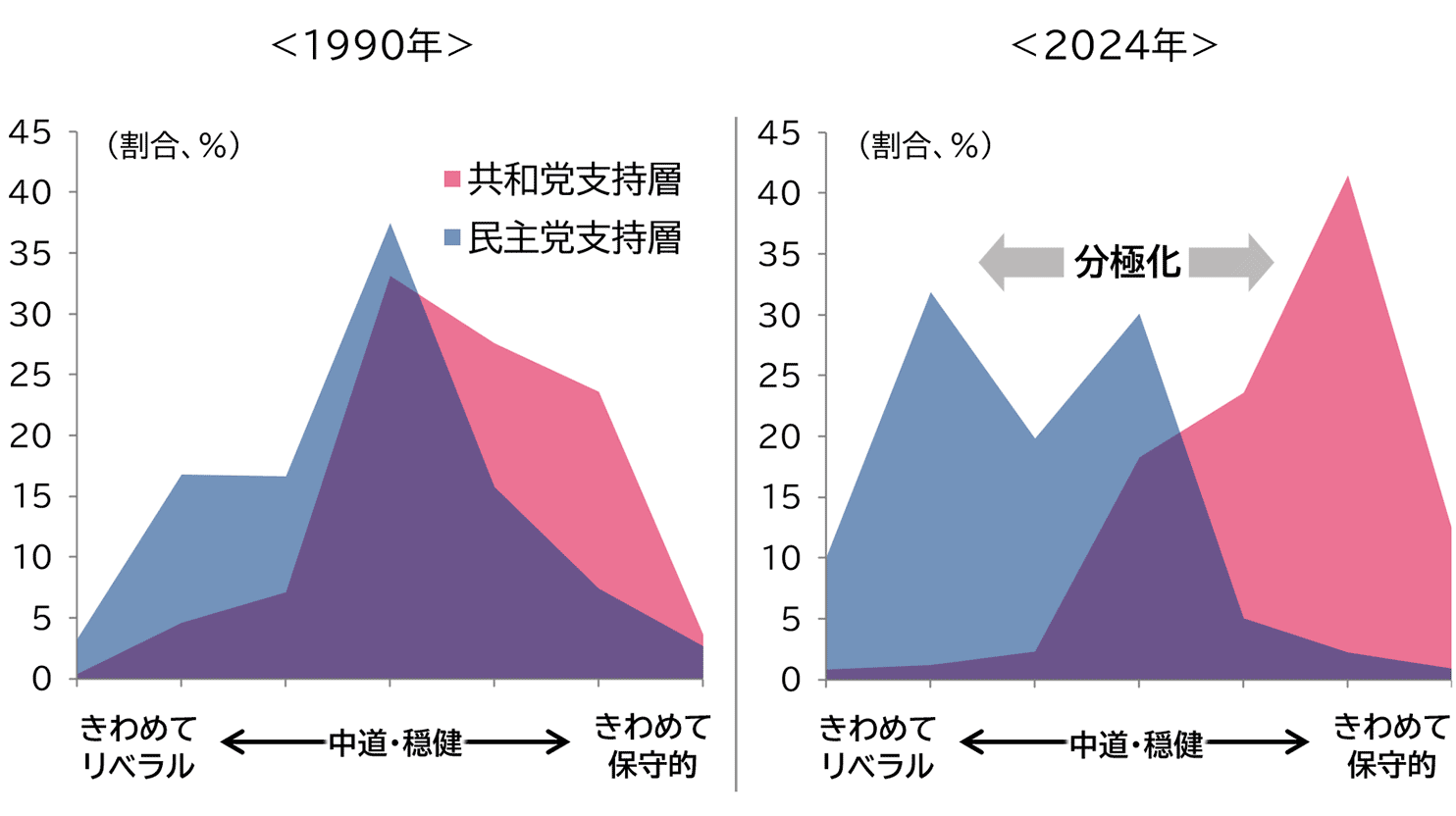
注:米国有権者の7段階イデオロギー自己評価(1=きわめてリベラル〜7=きわめて保守的)の分布。
出所:American National Election Studies(ANES)を基に三菱総合研究所作成
出所:American National Election Studies(ANES)を基に三菱総合研究所作成
政治的分極化は、①国際協調路線を支える国内の政治基盤を弱めるとともに、②政権ごとの外交方針の振幅を大きくし、米国外交の継続性に対する諸外国の疑念を深める。国内の支持基盤と対外的な信認の双方を損なうことで、国際協調を軸とする米国のリーダーシップを弱めるとみる。
①について、米国の国際協調路線は、民主・共和両党の中道・穏健派による超党派の合意に支えられてきた。しかし、中道・穏健派に代わって勢力を拡大するMAGA派と民主社会主義者らは、政治理念こそ大きく異なるものの、従来の外交政策に批判的で、国内経済・社会問題への対応を重視する点では共通する。こうした両極の勢力拡大により、国際協調路線を支えてきた超党派の政治基盤は弱まりつつある。
②について、ポスト・トランプ政権、とりわけ民主党政権の下では、民主主義などの価値観や多国間協調、気候変動対策を重視する外交へ回帰する可能性はある。しかし、そうした路線が超党派の合意に裏付けられない限り、ポスト・トランプ後の政権交代で再び覆されるとの疑念は拭えない。こうした外交方針の不安定さは、諸外国が米国の長期的なコミットメントを前提に行動することを難しくし、米国の国際的なリーダーシップを低下させるだろう。
揺らぐ米国の国際関与と懸念される「国際秩序の空白」
以上見てきたように、米国第一主義を生んだ構造要因は、ポスト・トランプの米国にも残り、対外政策に影響を及ぼし続けるだろう。米国は経済力・軍事力といった圧倒的なハードパワーを有する大国であり続けるものの、自由貿易体制や安全保障などの国際公共財を提供する意思が制約される状況は、今後も続く。
国際公共財の提供から後退する姿勢は、中長期的に米国のソフトパワーを損なう可能性が高い。こうした懸念と整合的に、各国の対米国好感度が低下している、という調査結果がある。各国の米中両国への好感度を見ると、米国への好感度は第2次トランプ政権発足以前から低下基調にあり、2026年には統計開始来初めて中国への好感度を下回った(図表7、左)。2026年調査の国別結果を見ると、英国をはじめとする米国の同盟・パートナー国の多くでも、中国への好感度が米国を上回っている(図表7、右)。
国際公共財の提供から後退する姿勢は、中長期的に米国のソフトパワーを損なう可能性が高い。こうした懸念と整合的に、各国の対米国好感度が低下している、という調査結果がある。各国の米中両国への好感度を見ると、米国への好感度は第2次トランプ政権発足以前から低下基調にあり、2026年には統計開始来初めて中国への好感度を下回った(図表7、左)。2026年調査の国別結果を見ると、英国をはじめとする米国の同盟・パートナー国の多くでも、中国への好感度が米国を上回っている(図表7、右)。
図表7 米中両国に対する好感度(各国の国民対象の調査)
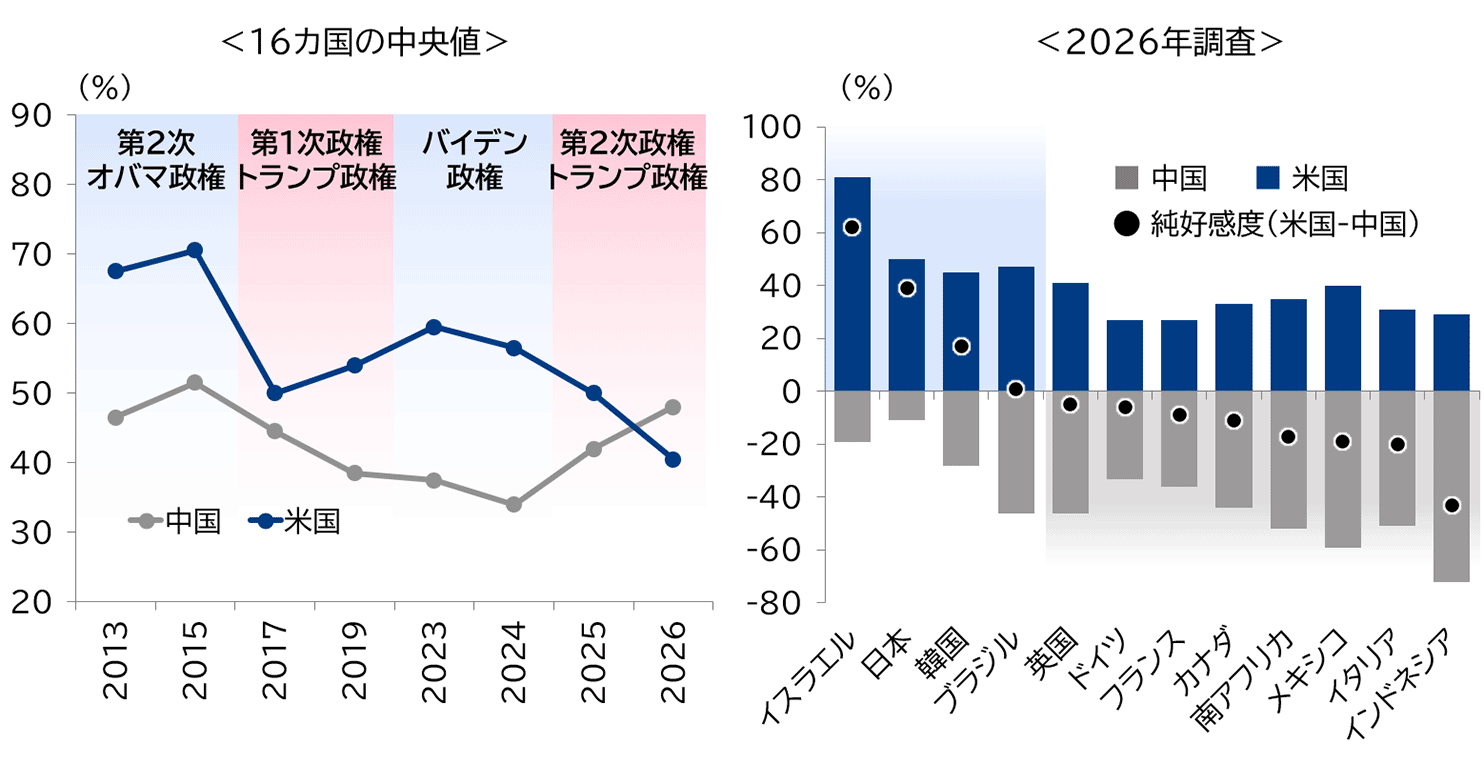
注:米国および中国に「好感を持つ」と回答した人の割合。左図は、各年のデータを継続して取得できる16カ国を対象に集計。右図の2026年調査は、同年2~5月に実施。米中いずれか一方を選ぶ設問ではなく、両国のそれぞれについて好感を持つかを尋ねたもの。
出所:Pew Research Center, “Views of China and Xi Are Improving Globally” and “Trump Gets Negative Reviews Internationally as Fewer Say U.S. Is a Reliable Partner”を基に三菱総合研究所作成
出所:Pew Research Center, “Views of China and Xi Are Improving Globally” and “Trump Gets Negative Reviews Internationally as Fewer Say U.S. Is a Reliable Partner”を基に三菱総合研究所作成
他方で、中国をはじめとする他国が、短期的に米国に代わって国際秩序を支えることも難しい。中国は経済・軍事面で存在感を高め、上海協力機構(SCO)などのパートナーシップを拡大しているものの、正式な同盟国は北朝鮮に限られ、米国のような広範で制度化された同盟網を有していない。国際通貨としての地位にもなお大きな差があり、2026年1~3月時点の世界の外貨準備に占める米ドルの割合が約57%に上る一方、人民元は約2%にとどまる※7。加えて、不動産市場の低迷や地方政府の債務問題、人口減少・高齢化などの国内課題は、中国が対外関与に振り向けられる余力を中長期的に制約する可能性がある。既存の覇権国である米国が国際公共財の提供を縮小する一方、他国のいずれもその空白を埋められない「キンドルバーガーの罠※8」に陥れば、世界経済の不安定化が常態化するおそれがある。
このような国際秩序の変容を踏まえ、日本には、良好な日米関係を外交の基軸としつつ、米国の関与低下を補完する役割が期待される。図表7で中国への好感度が米国を上回る国の中にも、日本と良好な関係を維持している国は少なくない。外務省の対日世論調査※9が示すように、日本は主要国・地域から重要なパートナーとして認識されており、各国から寄せられる信頼は、ルールに基づく国際秩序を支える上で重要な外交資産となる。
日本の国力低下は直視せざるを得ないが、だからこそ、各国からの信頼を具体的な経済協力につなげることが重要となる。①CPTPPなどを通じて自由で公正な通商ルールを支える、②グローバルサウスを含む国々との投資・技術・人材面の協力を深める、③重要物資の調達先の多角化や第三国での生産基盤整備を進める、という3つの取り組みを重層的に進める必要がある。同志国からグローバルサウスまで幅広い国々との協力を深め、開かれた国際経済秩序を支えていくことが、米国の国際関与が選択的となる時代に日本が果たすべき役割である。
参考文献
- 渡辺靖(2026)「分断が加速する実験国家——民主主義再生の手掛かりはどこに?」(『中央公論』2026年7月号、中央公論新社、pp.42–49)
- 中西寛(2026)「戦後秩序の解体と高市政権の課題」(『外交』Vol.96、外務省、pp.6–9)
- 三牧聖子編(2026)『「アメリカの戦争」と世界危機——イラン侵攻は何をもたらすのか』(岩波新書・新赤版2114、岩波書店)
- 西崎文子(2022)『アメリカ外交史』(東京大学出版会)
- 川北省吾(2025)『新書 世界現代史——なぜ「力こそ正義」はよみがえったのか』(講談社現代新書2798、講談社)
- Ikenberry, G. John(2005)“Power and Liberal Order: America’s Postwar World Order in Transition”, International Relations of the Asia-Pacific, Vol. 5, No. 2.
- Ikenberry, G. John(2018)“The End of Liberal International Order?”, International Affairs, Vol. 94, No. 1, pp. 7–23.
- Nicholas Bloom, Kyle Handley, André Kurmann & Philip A. Luck(2024)"The China Shock Revisited: Job Reallocation and Industry Switching in U.S. Labor Markets", NBER.
※1:The White House(2026)“Withdrawing the United States from International Organizations, Conventions, and Treaties that Are Contrary to the Interests of the United States”, Presidential Memorandum, January 7, 2026
https://www.whitehouse.gov/presidential-actions/2026/01/withdrawing-the-united-states-from-international-organizations-conventions-and-treaties-that-are-contrary-to-the-interests-of-the-united-states/(閲覧日:2026年8月17日)
※2:Bloom et al.(2024)は、中国からの輸入競争に伴う製造業からサービス業への雇用再配分は、西海岸や大都市圏など大卒人口比率の高い地域で進んだ一方、製造業依存度が高く大卒人口比率の低い中西部(ラストベルトなど)や南部では限定的であったと指摘している。
※3:Brown University,“Costs of War”
https://costsofwar.watson.brown.edu/(閲覧日:2026年6月26日)
※4:Barack Obama(2013)“Remarks by the President in Address to the Nation on Syria”, The White House, September 10, 2013,
※5:The White House(2025)“National Security Strategy of the United States of America”, November 2025,
※6:New York Times(2026年3月2日)は、ネタニヤフ首相がトランプ大統領に対して対イラン攻撃を強く働きかける一方、米情報機関や政権幹部からは、体制転換の実現可能性や戦争の長期化、エネルギー価格への影響などを巡り慎重な見方が示されていたと報じている。こうした懸念にもかかわらず、最終的にはトランプ大統領の判断で攻撃が決定された。
The New York Times,“How Trump Decided to Go to War With Iran”
https://www.nytimes.com/2026/03/02/
※7:IMF,“IMF Data Brief: Currency Composition of Official Foreign Exchange Reserves”
https://data.imf.org/en/news/
※8:「キンドルバーガーの罠」とは、既存の覇権国が国際公共財を提供する能力を失う一方、台頭する大国がその役割を十分に引き受けないことで、国際秩序が不安定化する状況を指す。経済史家チャールズ・キンドルバーガーの1930年代の世界恐慌に関する議論を踏まえ、ジョセフ・ナイが提示した概念。
※9:外務省「海外における対日世論調査」
https://www.mofa.go.jp/